You turned away for one minute. Now there’s a black, scorched layer stuck to the bottom of your favorite pan. Sound familiar? You’re not alone.
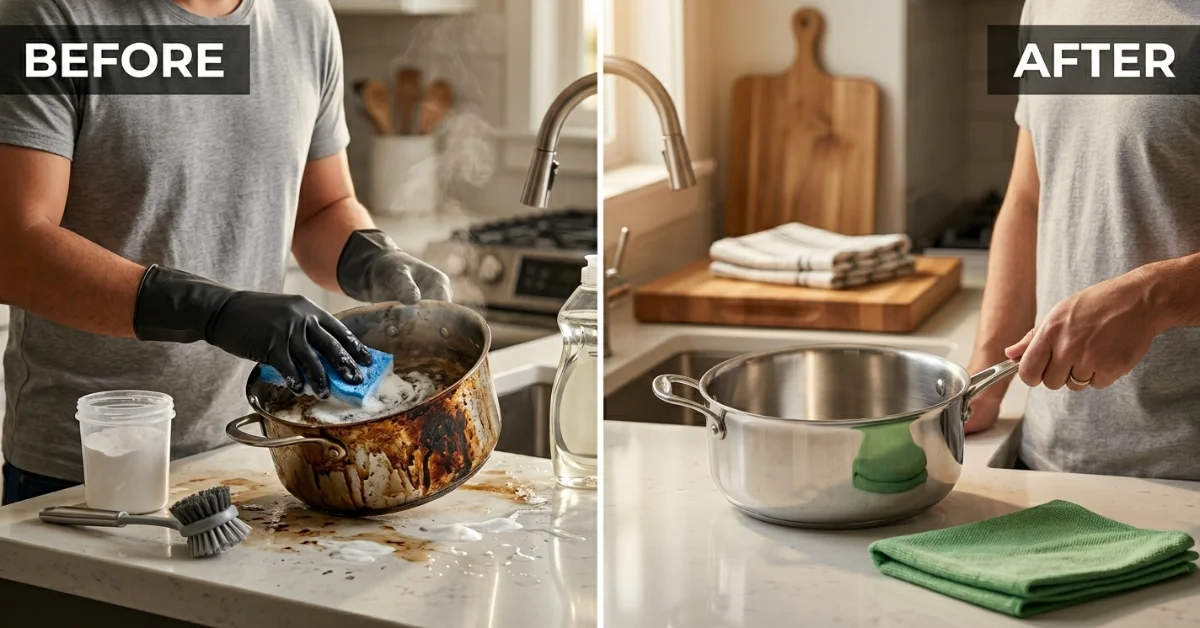
“The good news: a burnt pot or pan is rarely truly ruined. Knowing how to clean burnt pots and pans the right way — matched to your cookware type — can restore them completely. This guide covers every tested technique and the science behind each one.
Why Burnt Pans Happen — And Why Most Cleaning Methods Fail
Most people grab a sponge, scrub hard, and wonder why the burnt residue barely moves. The reason is chemistry — not effort.
What Actually Happens When Food Burns in a Pan
When food overheats, it undergoes a process called pyrolysis — a chemical breakdown caused by extreme heat. The organic compounds in food transform into carbon deposits, which bond tightly to the metal surface. This is what creates that stubborn black layer.
On stainless steel pans, the carbon bonds to microscopic surface irregularities. On cast iron, it fuses with the seasoning layer. On non-stick cookware, it clings to the coating itself. Each surface requires a different approach to break that bond safely.
Why Scrubbing Alone Never Fully Works
Dry scrubbing without a cleaning agent attacks the surface layer of carbon but misses the deeper bonds. You remove some burnt-on residue and scratch the surface in the process — without ever fully lifting the char.
The science says: you need either alkaline chemistry (baking soda), acid chemistry (white vinegar, lemon), or surfactant action (dish soap) to break the molecular bond first. Then scrubbing becomes easy.
For more info: How to Peel Garlic Quickly – Chef Tricks That Actually Work
The One Thing You Should Do Immediately After Burning a Pan
Do not let it dry. The moment you realize the food has burnt, remove it from the heat and add hot water while the pan is still warm. Burnt food absorbs water and begins loosening on its own within minutes. This single step cuts your cleaning time in half, regardless of which method you use later.
Quick Rule: Warm pan + hot water + a few drops of dish soap immediately after burning = 50% of the work already done before you even start cleaning.
How to Clean Burnt Pots and Pans — Tested Methods That Actually Work
These six methods have been tested on real burnt cookware. Each one is ranked honestly. The right choice depends on how badly the pan is burnt and what you have available.
Baking Soda Paste — The Easiest No-Boil Method
Best for: Light to medium burns | Any cookware type
Time: 15–20 minutes
Effort: Low
Mix baking soda with just enough water to form a thick paste. Spread it generously over the burnt area. Let it sit for 15–20 minutes. Then scrub with a non-scratch scouring pad in circular motions. Rinse and repeat if needed.
Why it works: Baking soda is a mild alkali with a pH of around 8.3. It chemically loosens burnt food residue and acts as a gentle abrasive — two functions in one ingredient.
Pro tip: For dried, stubborn burns, wet the burnt area first, apply the paste, cover the pan with a lid, and leave it overnight. Morning cleanup takes under 2 minutes.
Baking Soda + White Vinegar — The Fizzing Power Combo
Best for: Medium to heavy burnt-on food
Time: 20–25 minutes
Effort: Low to medium
Fill the pan with equal parts water and white vinegar. Bring to a boil on the stovetop. Remove from heat. Add 2 tablespoons of baking soda — it will fizz immediately. Let it soak for 15 minutes. Discard the liquid and scrub with a scouring pad.
Why it works: The acid-base reaction between vinegar and baking soda creates carbon dioxide bubbles. These bubbles physically push up against the burnt-on grime, lifting it from the surface without aggressive scrubbing. It’s chemistry doing the elbow grease for you.
Important: Add baking soda AFTER removing from heat. Adding it during boiling causes rapid overflow. Never use this method on non-stick pans — the boiling process can damage the coating.
Boiling Lemons — The Natural Smell-Good Solution
Best for: Stainless steel, light to medium burns
Time: 25–30 minutes
Effort: Very low
Quarter two or three lemons and place them in the burnt pan. Fill with a few inches of water. Bring to a boil and let simmer for 5–10 minutes. You’ll see burnt food particles floating to the surface. Discard the liquid and lemons, then wipe clean.
Why it works: Lemon juice contains citric acid, which breaks down carbon deposits and mineral stains on metal surfaces. It’s gentle enough for regular use and leaves your kitchen smelling fresh — not like chemicals.
Bonus: This is the best method when you have leftover lemons from cooking. Zero extra cost, zero chemicals, excellent results on stainless steel cookware.
Dishwasher Tablet Scrub — The Underrated 3-Minute Fix
Best for: Moderate burns on stainless steel
Time: 3–5 minutes
Effort: Low
Add a thin layer of warm water to the pan and heat on low for 1 minute. Remove from heat. Using a gloved hand, take a dishwasher tablet (such as Finish Powerball) and scrub it directly over the scorched area. The tablet dissolves as it works. Rinse with warm soapy water.
Why it works: Dishwasher tablets contain concentrated enzymes, surfactants, and mild bleaching agents. These break down baked-on food and grease at a chemical level. The tablet itself acts as both a detergent and a gentle scouring pad.
As tested by The Kitchn, this method earned a top rating for speed and minimal mess among five competing methods. It’s the fastest option for moderately burned-on food.
Aluminum Foil + Baking Soda — The Viral Hack That Actually Works
Best for: Stainless steel | Moderate to heavy burns
Time: 3–5 minutes
Effort: Low
Sprinkle 2–3 tablespoons of baking soda over the burnt surface. Add a splash of water to make a paste. Crumple a piece of aluminum foil into a ball and scrub in circular motions. The foil acts as a flexible scouring pad that conforms to the pan’s shape.
Why it works: Aluminum is harder than burnt carbon deposits but softer than stainless steel. It abrades the charred layer without scratching the pan surface. Combined with baking soda’s alkaline action, this combo lifts burnt-on residue in minutes with very little pressure.
Smart reuse tip: Use foil that’s already been used for cooking. It works just as well — nothing goes to waste.
Overnight Soak — The Zero-Effort Option for Stubborn Burns
Best for: Heavily burnt pans | Any cookware type
Time: 8+ hours (hands-off)
Effort: Near zero
Fill the burnt pan with hot water and add half a cup of baking soda or a squirt of dish soap. Let it soak overnight. In the morning, most of the burnt residue will have softened completely. A light scrub with a nylon brush finishes the job.
Some home cooks add a dryer sheet to the soak — a method that’s been circulating on Reddit’s r/CleaningTips. It loosens the top layer of burnt food. However, based on real testing, the dryer sheet alone is inconsistent. Pair it with baking soda for reliable results.
How to Clean Burnt Pans by Cookware Type
Not all cookware responds the same way to cleaning agents. Using the wrong method on the wrong pan type can cause permanent damage. Here’s exactly what to do for each.
How to Clean a Burnt Stainless Steel Pan
Stainless steel is the most forgiving material. It handles both acidic and alkaline cleaners well. The baking soda + vinegar boil method or the aluminum foil scrub both work excellently here.
For discoloration and rainbow staining — which happens from high heat — use Bar Keepers Friend with a damp cloth. This powdered cleanser contains oxalic acid, which dissolves the oxidized layer responsible for those blue-gold heat stains. It’s the professional’s standard for restoring stainless steel cookware.
Avoid: Bleach and chlorine-based cleaners on stainless steel. They cause pitting and corrosion over time. Always scrub in the direction of the metal’s grain to prevent surface scratches.
How to Clean a Burnt Cast Iron Skillet Without Ruining the Seasoning
Cast iron requires a completely different approach. Soap strips the seasoning layer — that protective polymerized oil coating that makes cast iron naturally non-stick. Never soak cast iron in water, and never put it in the dishwasher.
The correct method: While the pan is still warm, add coarse sea salt and scrub with a folded paper towel or a stiff nylon brush. The salt acts as a natural abrasive. Rinse quickly with hot water, dry immediately on the stovetop over low heat, then apply a thin layer of vegetable oil or grapeseed oil to re-season.
Self-cleaning oven method: For heavily burnt cast iron, place it in the oven during the self-cleaning cycle. The extreme heat (900°F+) reduces all burnt residue to ash. Re-season completely afterward.
How to Clean a Burnt Non-Stick Pan Safely
Non-stick pans demand the most care. Never use steel wool, metal scrapers, or abrasive pads on a non-stick surface — you will permanently damage the coating.
Safe method: Fill the pan with water and add 2 tablespoons of baking soda. Bring to a gentle simmer for 10 minutes. Let cool completely. Wipe with a soft cloth or non-scratch sponge. For stubborn spots, apply a thin baking soda paste and leave for 30 minutes before gently wiping.
Safety warning: If your non-stick pan’s PTFE coating (commonly called Teflon) is scratched, flaking, or peeling, stop using it immediately. A damaged non-stick surface can release particles into food. This is the one time when throwing the pan away is the right call.
How to Clean Burnt Enameled Cast Iron and Ceramic Pans
Enameled cast iron — like Le Creuset and similar brands — has a glass-like enamel coating that’s more delicate than bare cast iron but tougher than non-stick. Avoid metal scrubbers and harsh abrasives.
Best approach: Fill with warm water and add 2 tablespoons of baking soda. Bring to a gentle boil for 5 minutes. Let cool, then scrub gently with a non-abrasive sponge. For persistent staining, a paste of baking soda and hydrogen peroxide left for 30 minutes works well on light-colored enamel.
Avoid boiling acidic cleaners like white vinegar in enameled pots — prolonged acid exposure can gradually dull the enamel finish over time.
How to Clean the Outside Bottom of a Burnt Pan
The outside bottom of a pan gets burnt too — from gas flame spillover, electric coil contact, and years of baked-on grease. Here’s how to tackle it properly.
Why the Outside Bottom Gets Worse Over Time
Every time you cook, grease and oil drip down the sides of the pan and collect on the exterior bottom. Heat from the burner bakes this layer repeatedly until it forms a thick, dark polymerized grease crust that normal washing never touches.
Over months and years, this buildup insulates the pan’s bottom from heat — meaning your food takes longer to cook and heats unevenly. Cleaning the outside bottom of your pan isn’t just cosmetic. It actually improves cooking performance.
Salt + Baking Soda + Steel Wool — The Outside Bottom Method
Flip your pan upside down. Sprinkle coarse salt and baking soda over the burnt exterior. Squeeze dish soap over everything. Use steel wool or a heavy-duty scrubbing pad to work the mixture into the burnt layer. Lay paper towels soaked in white vinegar over the surface and let sit for 5–10 minutes. Remove and scrub again. Rinse thoroughly.
This combination of mechanical abrasion (steel wool), alkaline chemistry (baking soda), and acid penetration (vinegar) attacks the polymerized grease from all three angles simultaneously.
Bar Keepers Friend — When You Need the Big Guns
For years of accumulated baked-on grease on the exterior, Bar Keepers Friend is the professional standard. Mix with a small amount of water, apply to the pan bottom with a damp cloth, and scrub. It’s oxalic acid-based, cuts through oxidized grease and carbon buildup that even baking soda can’t touch.
Pro kitchen tip: Oven cleaner spray works exceptionally well on exterior pan bottoms. Spray, cover with a plastic bag, and leave overnight. The burnt grease wipes off almost effortlessly the next morning. Only use this outdoors or in a well-ventilated space.
When to Accept It and When to Keep Scrubbing
Some discoloration on the outside bottom of older pans is permanent — especially on aluminum. If the burnt layer is thin and the pan heats evenly, it’s functionally fine to use. If the bottom has a thick, uneven crust that causes hot spots while cooking, keep cleaning or consider replacing.
How to Prevent Burnt Pots and Pans in the First Place
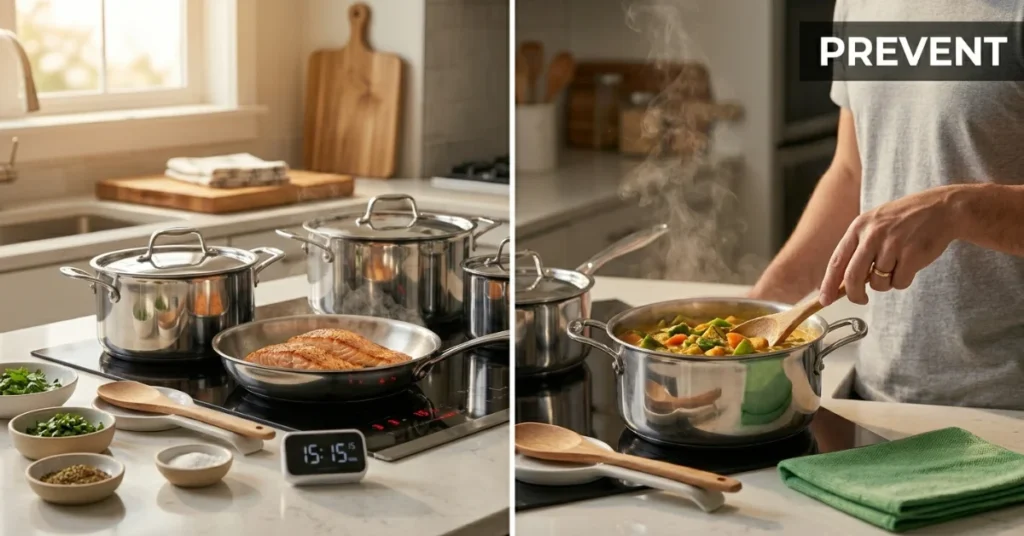
The best cleaning method is the one you never need. A few simple habits protect your cookware and cut cleaning time dramatically.
The Right Heat Settings for Each Pan Type
Most home cooks use too much heat — this is the number one cause of burnt cookware. As a general rule:
- Stainless steel: Preheat on medium before adding oil or food. Never preheat on high.
- Cast iron: Heats slowly but retains heat intensely. Medium-low is usually enough.
- Non-stick: Always use low to medium heat. High heat degrades the coating rapidly.
- Enameled cast iron: Medium heat maximum. High heat cracks enamel over time.
Adding a thin layer of cooking oil before food goes in also creates a protective barrier between food and the metal surface, significantly reducing the chance of sticking and burning.
Should You Actually Throw Away a Burnt Pan?
This is a question that comes up constantly on Reddit’s r/CleaningTips and r/cookingforbeginners — and the answer depends on the pan type and damage level.
- Throw it away if the non-stick coating is scratched, peeling, or flaking. Damaged PTFE coatings are a genuine health concern.
- Throw it away if the pan is warped and no longer sits flat. Uneven heating causes food to burn in certain spots consistently.
- Keep it if: it’s stainless steel or cast iron with surface discoloration only. Both can be fully restored regardless of how badly burnt.
- Keep it if: the enamel is stained but not chipped. Stained enamel is cosmetic and doesn’t affect cooking safety.
How to Season and Protect Your Cookware After Deep Cleaning
After any deep cleaning session, cast iron must be re-seasoned immediately. Apply a very thin layer of flaxseed oil, vegetable oil, or grapeseed oil to the entire surface. Place upside down in an oven at 450°F for one hour. Let cool in the oven.
For stainless steel, dry thoroughly after cleaning and store in a dry location. Moisture causes water spots and can accelerate surface oxidation over time. A light coat of cooking oil on the interior before storage adds extra protection.
FAQ — Your Burnt Pan Questions Answered
How Do You Clean a Badly Burnt Pan?
For a badly burnt pan, start with the baking soda + white vinegar boil method. Fill with equal parts water and vinegar, bring to a boil, add 2 tablespoons of baking soda off the heat, and soak for 15 minutes. For extreme burns, apply a thick baking soda paste overnight and scrub in the morning. For stainless steel, Bar Keepers Friend with a scouring pad handles the most severe cases. The key is giving the cleaning agent time to break the bond before scrubbing.
How Do I Get the Black Stuff Off My Pots and Pans?
That black residue is carbonized food — the result of pyrolysis from overheating. The most effective removal method is the aluminum foil + baking soda scrub for stainless steel, or a dishwasher tablet rubbed directly on the blackened area. Both methods use chemistry to loosen the carbon bonds before physical scrubbing. For cast iron, use coarse salt and a stiff brush — never soap or soaking.
Does Boiling Vinegar Clean a Burnt Pan?
Yes — but with conditions. Boiling white vinegar alone in a burnt pan loosens some burnt food residue and effectively removes hard water stains and mineral deposits from stainless steel. However, for actual burnt food, vinegar works far better when combined with baking soda after boiling. The acid-base reaction creates the fizzing action that physically lifts charred bits off the surface. Vinegar alone is mild. Vinegar plus baking soda is powerful.
Does Baking Soda Remove Burnt Stains?
Yes. Baking soda is one of the most effective and safest cleaners for burnt stains on cookware. Its mild alkalinity (pH 8.3) breaks down the acidic nature of carbonized food deposits. It also works as a gentle abrasive. Used as a paste, it softens and lifts burnt-on residue without scratching most cookware surfaces. It is safe for stainless steel, enameled cast iron, and ceramic. It should be used gently on non-stick surfaces with a soft cloth only.
Is Baking Soda or Vinegar Better for Removing Stains?
For burnt food stains: baking soda wins. Its alkaline chemistry is specifically effective against carbonized organic matter. For hard water mineral stains and calcium deposits, white vinegar wins. Its acidity dissolves mineral buildup that baking soda can’t touch. For the toughest burnt pans: use both together. The combination triggers an acid-base reaction that outperforms either ingredient used alone. When in doubt, start with a baking soda paste, then add vinegar if needed.
Does Baking Soda Damage a Stainless Steel Pan?
No — when used correctly. Baking soda is safe on stainless steel cookware. It is mildly abrasive but not harsh enough to scratch the surface with normal use. However, leaving a very concentrated baking soda paste on stainless steel for extended periods (several hours) can cause slight surface dulling. For best results, apply, scrub, and rinse within 20–30 minutes. Never use baking soda with bleach on stainless steel — this combination produces a chemical reaction that can damage the surface and is hazardous to health.
Conclusion:
A burnt pot or pan is almost always fixable. The method just needs to match the pan type and the severity of the burn.
Baking soda is your everyday workhorse. Vinegar boosts it when burns are heavy. Bar Keepers Friend handles the toughest cases on stainless steel. And for cast iron, salt and immediate re-seasoning is all you ever need.
Clean the outside bottom too — it improves your cooking, not just the appearance. And the next time something starts to burn, add hot water immediately. That one habit alone changes everything.
Your cookware is tougher than you think — treat it right, and it’ll last a lifetime.