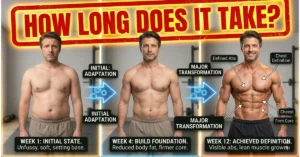
You started going to the gym. You’re putting in the work. But the mirror hasn’t changed yet — and you’re wondering how fast gym results actually show.
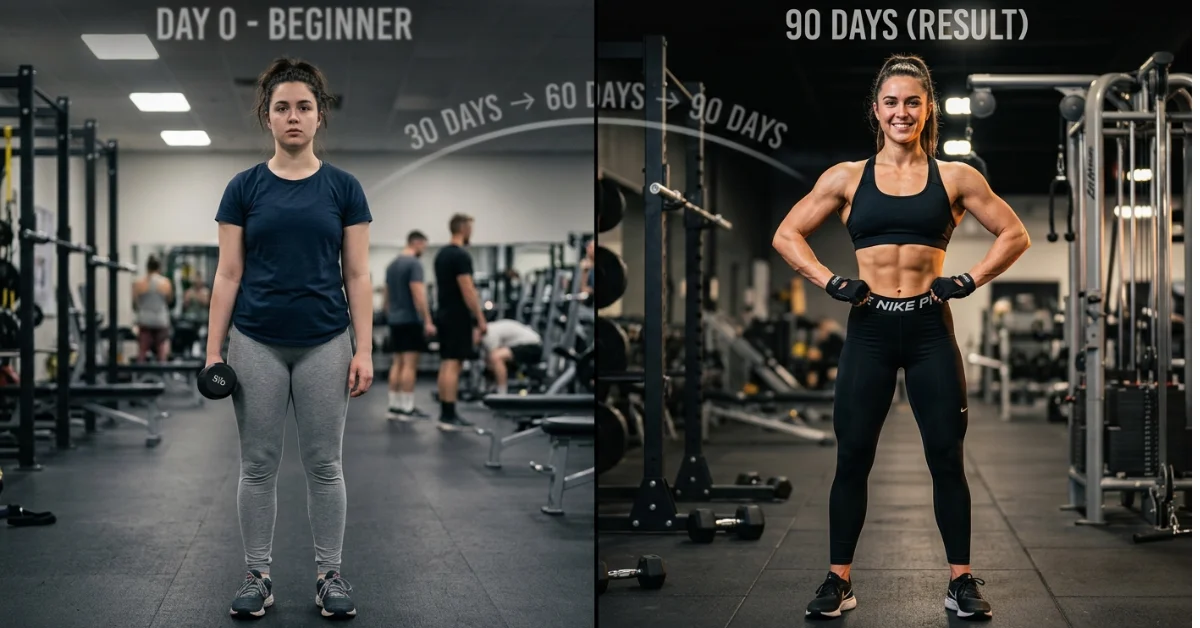
Here’s the truth: your body is already changing. You just can’t see it yet. This guide breaks down exactly what happens at 30, 60, and 90 days — backed by exercise science, real timelines, and the factors that control your speed of progress.
Why Gym Results Don’t Show Up Overnight (And Why That’s Normal)
Most people quit between weeks 3 and 6. That’s exactly when your body is working its hardest — just not in ways you can see in the mirror yet.
Before visible changes happen, your nervous system adapts first. This is called neural adaptation — your brain gets better at firing and coordinating muscle fibers. Strength goes up, coordination improves, and energy increases. But the scale? It barely moves.
According to a 2004 study from the University of Wisconsin, even after six weeks of consistent training, a group of 25 men showed little visible physical change — yet internal performance markers improved significantly.
Internal progress always comes before external results. Better sleep, improved mood, more energy, less breathlessness climbing stairs — these are real signs your body is adapting. Don’t dismiss them.
What most people won’t tell you: Gym anxiety and the comparison trap are the #1 reasons people stop early. Someone else’s 60-day transformation was built on years of prior training, better genetics, or a different starting point. Your timeline is yours. Focus on your data only.
For more info: How Long to Cook Chicken Perfectly — Oven, Pan & Air Fryer Guide
What Really Controls How Fast You See Gym Results
Not everyone progresses at the same speed. Here are the key variables that directly affect your gym results timeline:
- Genetics & Hormones — Testosterone accelerates muscle protein synthesis. Men typically gain visible muscle faster than women, but women build proportional strength just as efficiently. Your muscle fiber composition (fast-twitch vs slow-twitch) is largely genetic.
- Starting Fitness Level — Beginners have the biggest advantage. The body responds aggressively to new stimulus. This is called newbie gains — rapid muscle and strength increases in the first 8–12 weeks that experienced lifters can never replicate.
- Workout Intensity & Progressive Overload — Doing the same weight every session = zero new stimulus = zero new growth. Progressive overload (gradually increasing weight, reps, or resistance) is the non-negotiable engine of all physical change.
- Nutrition — You cannot out-train a poor diet. Research shows 1.6–2.2g of protein per kg of bodyweight daily is optimal for muscle protein synthesis (MPS). Without adequate protein, your muscles cannot repair or grow.
- Sleep & Recovery — Your muscles don’t grow in the gym. They grow during deep sleep when satellite cells repair micro-tears in muscle fibers, making them thicker and stronger. Less than 7 hours of sleep significantly blunts muscle growth and fat loss.
- Age & Gender — Hormonal shifts after age 35 slow muscle protein synthesis. This doesn’t stop results — it just means recovery nutrition and sleep become even more critical.
- Body Composition Baseline — Someone with higher body fat may see weight-loss results faster. Someone lean may see muscle definition faster. Your starting body fat percentage shapes what changes first.
The Real 30, 60 & 90 Day Gym Results Breakdown
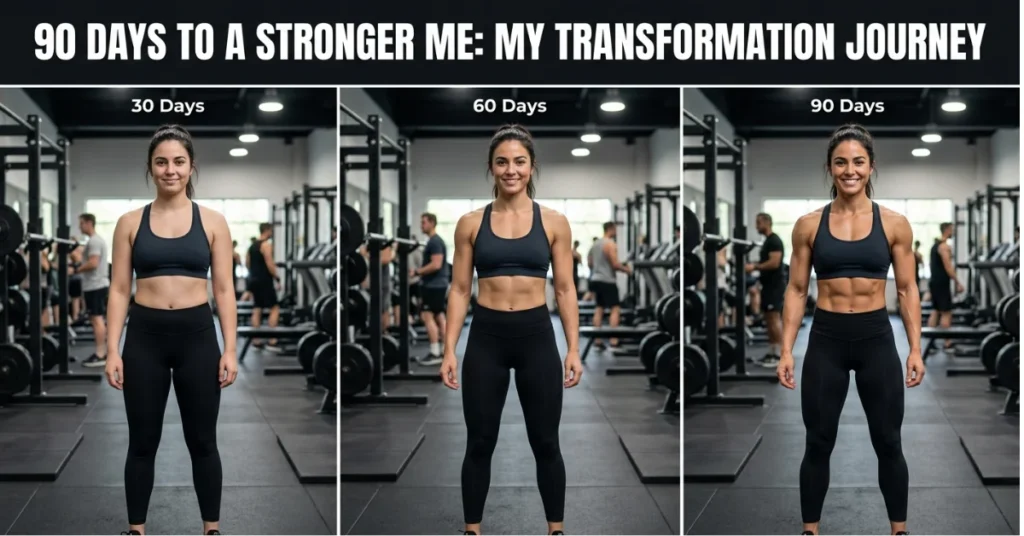
Here is an honest, science-based timeline of what most people experience. Remember — these are general benchmarks. Your results vary based on the factors above.
30 Days: What to Expect in Your First Month
What’s actually happening: Your nervous system is rewiring. Your cardiovascular system is building new capillaries. Your body is learning movements it’s never done before.
Weeks 1–2:
- Increased energy levels and improved mood (endorphin effect is real and measurable)
- Better sleep quality — exercise regulates your circadian rhythm
- Mild muscle soreness (DOMS — Delayed Onset Muscle Soreness) tells you tissue is being stressed
- Slight improvements in endurance — stairs feel easier, daily tasks feel lighter
Weeks 3–4:
- Strength numbers begin climbing — neural efficiency is improving fast
- Clothes may start fitting slightly differently, especially around the waist
- Fat loss: A safe, sustainable rate is 0.5–1 kg (1–2 lbs) per week in a calorie deficit. At 30 days you may have lost 2–4 kg of true body fat
- Muscle: No visible hypertrophy yet for most people — but muscle protein synthesis is active after every session
What the scale won’t tell you at 30 days: Water retention from new training, glycogen storage in muscles, and inflammation from tissue repair can all mask fat loss on the scale. Progress photos and measurements are far more accurate at this stage. [Health.com confirms](https://www.health.com/fitness/scale-weight-loss-progress) that the scale is one of the least reliable short-term progress tools.
60 Days: When Real Changes Start to Appear
This is where things get exciting. By week 6–8, visible changes begin showing up for most consistent trainees.
- Visible muscle definition begins emerging — especially in shoulders, arms, and upper back for those doing resistance training
- Newbie gains peak here for beginners — rapid increases in lean muscle mass that experienced lifters cannot replicate
- Body recomposition is happening simultaneously: losing fat while gaining muscle, even without a perfect calorie surplus or deficit
- Cardiovascular endurance is noticeably stronger — you can sustain longer sessions, recover faster between sets
- Progressive overload results are measurable — you’re likely lifting 15–30% more than week one on key compound movements like squats, deadlifts, and bench press
- Leaner silhouette becomes visible — better-fitting clothes, reduced bloating, improved posture
According to Polar’s fitness research, most people notice initial changes at 4–6 weeks, but the longer-term visual results they’re actually after take 8–12 weeks of consistent effort.
90 Days: The Transformation Milestone
Three months of consistent training is a genuine milestone. Most people who reach 90 days have built a lasting habit — and the physical results confirm it.
- Significant body composition shift — measurable reduction in body fat percentage alongside real gains in lean muscle mass
- Muscle hypertrophy is now visually apparent — muscle size has increased due to repeated cycles of mechanical damage and repair via satellite cells
- Compound lifts — squats, deadlifts, pull-ups, bench press — feel strong and controlled. Form is dialed in.
- For runners and cardio trainees: running longer distances, maintaining faster pace, recovering more quickly post-workout
- DEXA scan or InBody scan at 90 days would show clear shifts in muscle-to-fat ratio — even if the scale hasn’t moved dramatically
what to do when progress slows at 90 days:
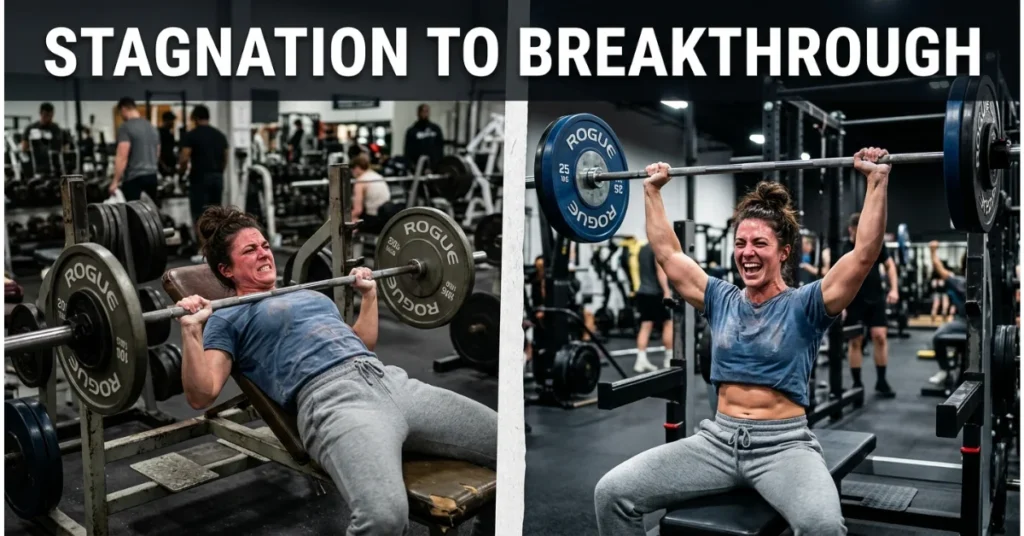
Around 90 days, many trainees hit a plateau. This isn’t failure. It’s your body adapting to the stimulus it’s been given. To break through:
- Increase training volume — add sets, reps, or frequency
- Rotate exercise selection to recruit different muscle fibers
- Audit nutrition — protein targets and calorie intake often drift over time
- Prioritize sleep and stress management — elevated cortisol halts muscle growth and promotes fat storage
How to Track Gym Progress the Right Way (Beyond the Scale)
The bathroom scale is one of the worst tools for measuring gym progress. It cannot distinguish between fat, muscle, water, or food weight. Here’s what actually works:
- Progress Photos — Take front, side, and back photos every 2 weeks under the same lighting. The visual difference over 90 days is often dramatic even when the scale barely changes.
- Body Measurements — Track waist, hips, chest, arms, and thighs with a tape measure. Inches lost from the waist while inches added to the arms = body recomposition working perfectly.
- Strength & Endurance Logs — Track your 1RM (one-rep max) on major lifts. A 20% strength increase in 90 days is measurable, motivating proof of progress.
- Fitness Journal — Log workouts, meals, sleep quality, and energy levels. Patterns emerge that show you exactly what’s working.
- How Clothes Fit — A pair of jeans fitting looser is more meaningful than any number on a scale.
- Advanced: DEXA Scan / InBody Scan — These tools measure actual body fat percentage and lean muscle mass with precision. Most gyms and clinics offer them. A DEXA scan at day 1 and day 90 gives you irrefutable data on body recomposition — something competitors almost never mention.
- Non-Scale Victories (NSVs) — Energy levels, mood stability, sleep quality, reduced resting heart rate, and improved daily movement are all legitimate, measurable signs of fitness progress.
The 3 Biggest Mistakes That Slow Your Gym Results
Working hard but not seeing results? One of these three mistakes is almost always the cause.
Mistake 1 — No Progressive Overload
Lifting the same weight every session sends your body zero signal to adapt. Progressive overload — increasing weight, reps, sets, or intensity over time — is the only proven mechanism for continuous muscle growth and strength gains. If your workouts feel comfortable, they’re not producing results.
Mistake 2 — Poor Nutrition
You cannot out-train a bad diet. Period. Muscle protein synthesis requires amino acids from dietary protein. Without hitting your protein targets (1.6–2.2g per kg of bodyweight), your muscles cannot rebuild after training. For fat loss, a calorie deficit is non-negotiable — no exercise can override a calorie surplus indefinitely.
Mistake 3 — Ignoring Recovery
Your muscles do not grow during your workout. They grow during rest — specifically during deep sleep, when growth hormone peaks and satellite cells repair damaged muscle fibers. Chronic under-recovery leads to overtraining syndrome: declining performance, persistent fatigue, mood disruption, and increased injury risk. Most fitness blogs never warn about this.
Bonus Mistake — Inconsistency
The most sophisticated workout program in the world produces nothing without consistency. Nike’s fitness team puts it clearly: results require showing up repeatedly, progressively, and patiently. Sporadic effort produces sporadic results.
FAQ: Your Biggest Gym Results Questions Answered
Q: What happens after 1 month of gym?
A: After one month of consistent gym training, most people experience improved energy, better sleep, and noticeable strength gains due to neural adaptations. Visible physical changes are minimal at this stage — your body is rewiring internally. You may lose 2–4 kg of fat in a calorie deficit and notice clothes fitting slightly differently. Internal changes are real even when the mirror doesn’t yet reflect them.
Q: What is the 3-3-3 rule at the gym?
A: The 3-3-3 rule refers to a foundational workout structure: 3 exercises, 3 sets each, 3 days per week. It’s a beginner-friendly framework that ensures adequate training volume and recovery time. For beginners, this structure is enough to trigger muscle hypertrophy and strength adaptation when paired with proper nutrition and sleep.
Q: How long does it take to actually see results from working out?
A: According to Healthline, you’ll feel results in 2–4 weeks and see visible results in 6–12 weeks with consistent training and proper nutrition. Strength gains can appear as early as 2–3 weeks due to neural efficiency improvements. Visible muscle definition typically requires 8–12 weeks of dedicated resistance training.
Q: Can I lose noticeable weight in 2 weeks?
A: Yes — but with an important distinction. You can lose 2–4 lbs (1–2 kg) in two weeks through a combination of fat loss and water weight reduction. However, dramatic drops in two weeks are mostly water and glycogen, not true fat loss. Sustainable fat loss runs at 0.5–1 kg per week. Fitness Cartel’s research confirms this rate as both healthy and maintainable long-term.
Q: Can I lose 10 kg in 2 weeks?
A: No — not safely, and not through fat loss. Losing 10 kg of actual body fat in 2 weeks would require a daily calorie deficit of approximately 35,000 calories, which is physiologically impossible. Any rapid 10 kg loss in 2 weeks is water weight, muscle tissue, and glycogen — not fat. This approach causes muscle catabolism, metabolic slowdown, and rebound weight gain. Safe, evidence-based fat loss targets 0.5–1 kg per week.
Q: What body parts show weight loss first?
A: Fat loss is systemic — your body determines where it loses fat based on genetics, hormones, and sex. Most people notice loss first in the face, neck, and collarbone area, followed by the chest and abdomen. Women often lose from the hips and thighs later due to hormonal fat distribution patterns. The abdominal region (visceral fat) often responds strongly to consistent cardio and a calorie deficit, which is why many people notice a slimmer waistline within the first 4–8 weeks.
Conclusion
How fast gym results show depends on your consistency, nutrition, recovery, and starting point — not on how hard you pushed in week one. At 30 days, your body is adapting internally. At 60 days, visible changes begin. At 90 days, a real transformation is measurable.
The only people who don’t see results are the ones who stop. Show up, progressively overload, eat enough protein, sleep enough, and track real metrics. The results will come — and they’ll stay.