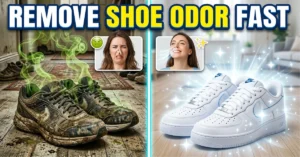
Nobody wants to pull off their shoes and clear the room. Shoe odor is one of the most common — and most embarrassing — foot hygiene problems in America. The good news? It’s 100% fixable.
This guide covers everything: the real science behind the smell, the fastest home remedies, the best products on the market, and the habits that keep odor from coming back.
Why Do Shoes Smell So Bad?
Most people think smelly shoes are a cleanliness problem. They’re not. They’re a bacterial problem.
Your feet have roughly 250,000 sweat glands — more per square inch than anywhere else on your body. Each foot can produce up to half a pint of sweat per day, according to the American Podiatric Medical Association.
That moisture gets trapped inside your shoes. Odor-causing bacteria — mainly Brevibacterium and Staphylococcus epidermidis — feed on sweat and dead skin cells. As they break down, they release isovaleric acid, the compound responsible for that sharp, sour shoe smell.
The key factors that make shoe odor worse:
- Dark, enclosed space — bacteria multiply faster without airflow
- Synthetic materials like rubber and plastic trap moisture more than leather or canvas
- Wearing the same shoes two days in a row — no drying time means bacteria keep growing
- Skipping socks — direct skin contact dramatically increases sweat transfer
- Medical conditions like hyperhidrosis (excessive sweating) or athlete’s foot accelerate odor
According to a study published in the Journal of the American Academy of Dermatology, 15% of Americans suffer from hyperhidrosis, making shoe odor a clinically relevant issue — not just a hygiene inconvenience.
For more info: The Easiest Way to Make Tools in Little Alchemy (Step-by-Step)
How to Deodorize Shoes Fast — Methods That Actually Work
Baking Soda — The #1 Household Shoe Deodorizer
Baking soda (sodium bicarbonate) is arguably the most proven, affordable solution for shoe odor removal. It works by neutralizing the acidic compounds produced by bacteria — not just masking them.
How to use it: Pour 1–2 tablespoons directly into each shoe. Leave overnight (8–12 hours minimum). Shake out completely before wearing.
For a cleaner application, put baking soda inside a thin sock or coffee filter, tie it off, and drop it inside the shoe. This prevents white residue on your insoles.
Does it really work? Yes — baking soda is alkaline (pH ~8.3), and it directly neutralizes the acidic isovaleric acid that causes the smell. It also absorbs moisture, removing the environment bacteria need to thrive.
White Vinegar Spray — Kill Bacteria on Contact
White vinegar is a natural antimicrobial. Its acetic acid content kills odor-causing bacteria directly.
Mix equal parts white vinegar and water in a spray bottle. Spray the inside of your shoes lightly. Let them air dry completely — outdoors if possible. The vinegar smell disappears as it dries, taking the shoe odor with it.
Important: Don’t use on leather shoes — the acid can dry out and crack the material. Stick to canvas, mesh, or synthetic footwear.
How to Get the Smell Out of Shoes in 5 Minutes
Need a quick fix before heading out? Try these fast deodorizing methods:
- Rubbing alcohol spray — isopropyl alcohol (70%) kills surface bacteria in seconds. Spray inside, let air in for 2–3 minutes.
- Dryer sheets — stuff one inside each shoe and leave for a few minutes. They don’t eliminate bacteria but temporarily mask odor with fragrance.
- Foot powder — shake talcum powder or cornstarch inside to absorb moisture and neutralize surface smell quickly.
- Freezer trick — seal shoes in a plastic bag and freeze for a few hours. Cold kills some odor-causing bacteria. Not instant, but effective overnight.
Activated Charcoal Inserts — Deep Odor Absorption
Activated charcoal is a powerhouse odor absorber used in water filters, air purifiers, and medical treatments. It works through adsorption — trapping odor molecules in its porous surface at a molecular level.
Unlike baking soda, activated charcoal inserts are reusable. Set them in sunlight for 1–2 hours monthly to recharge them.
Brands like Moso Natural and Zederna cedar insoles are popular USA options. They work well inside sneakers, boots, and dress shoes — any shoe you wear regularly.
Best Natural Remedies to Deodorize Shoes at Home
Tea Tree Oil & Essential Oils
Tea tree oil (Melaleuca alternifolia) has proven antimicrobial and antifungal properties. A 2006 study in the Journal of Applied Microbiology confirmed its effectiveness against common bacteria, including Staphylococcus.
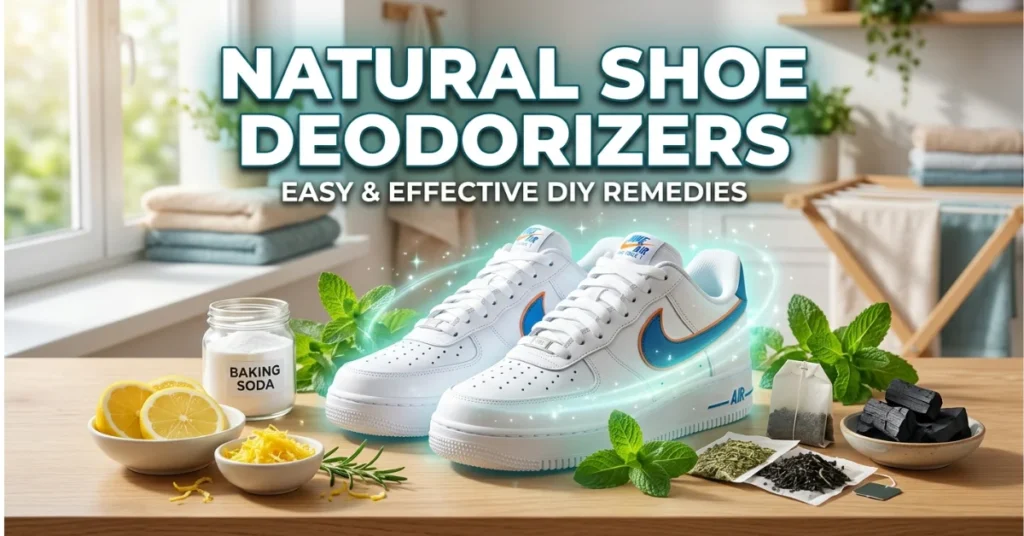
Add 3–4 drops to a cotton ball and place it inside each shoe overnight. You can also mix 10 drops with water in a spray bottle for a natural shoe deodorizer spray.
Other effective essential oils: lavender (antibacterial + pleasant scent), eucalyptus (antimicrobial), and peppermint (refreshing, naturally antimicrobial).
Cedar Shoe Trees — Moisture + Odor Control Combined
Cedar shoe trees do two things simultaneously: they absorb moisture and release natural cedar oils that inhibit bacterial growth. This makes them one of the most effective long-term shoe deodorizing solutions.
Brands like Stratton and Woodlore are widely available in the USA. Red cedar is the most effective variety for odor control.
Insert them immediately after taking your shoes off. They maintain shoe shape AND keep them smelling fresh — something most home remedies can’t do.
Does Freezing Shoes Really Work?
Yes and no. Freezing shoes kills some surface bacteria but not all. More importantly, it halts bacterial activity while frozen — but once the shoes warm up, surviving bacteria resume multiplying.
It’s a decent short-term fix, especially for sneakers you can’t wash. But it’s not a substitute for cleaning.
Do Dryer Sheets Deodorize Shoes?
Dryer sheets are a popular life hack — and they do work, but only temporarily. They contain fragrances and softening agents that mask odor. They don’t kill bacteria or neutralize odor compounds.
Think of dryer sheets as a Band-Aid, not a cure. Use them for quick freshening between deeper treatments.
Best Shoe Odor Eliminators You Can Buy (USA Market)
Top Sprays, Powders & Insoles
The US market has excellent shoe deodorizer options across every price range:
| Product | Type | Best For |
| Odor-Eaters | Insole | All-day odor + moisture control |
| Dr. Scholl’s Odor-X | Powder | Athletic shoes, heavy sweaters |
| Rocket Pure Natural Deodorizer | Spray | Eco-conscious users |
| Crep Protect | Spray | Premium sneakers |
| Sof Sole Fresh Fogger | Spray | Quick whole-shoe treatment |
Insoles are often underrated. Replacing worn-out insoles alone can dramatically reduce shoe odor — old insoles are soaked with bacteria and sweat over time. Brands like Superfeet and Spenco offer antimicrobial insoles with activated charcoal layers.
UV Shoe Sanitizers
This is where most shoe care articles fall short. UV shoe sanitizers use ultraviolet-C (UVC) light to destroy bacteria and fungi at a DNA level — the same technology used in hospital sterilization equipment.
Devices like the SteriShoe UV Shoe Sanitizer and Pedifix Shoe Zap are clinically validated tools. A 2012 study published in the Journal of the American Podiatric Medical Association found that UVC sanitizers eliminated up to 99.9% of microorganisms inside footwear.
They’re especially useful for people with diabetes, athlete’s foot, or chronic shoe odor that doesn’t respond to standard treatments.
Cost: $30–$80. Reusable indefinitely. A genuinely underused solution worth knowing about.
How to Prevent Shoe Odor Before It Starts
Daily Habits That Make a Real Difference
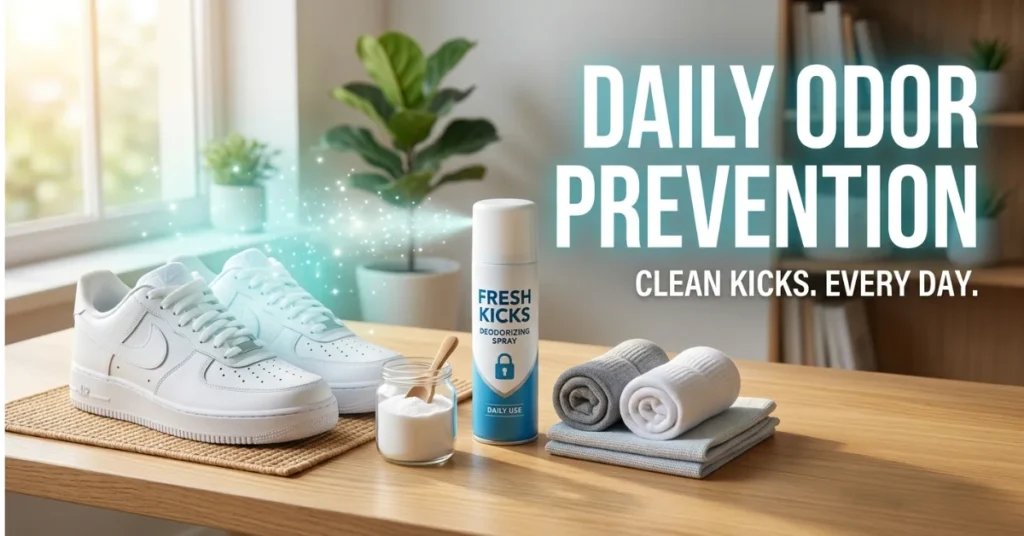
Prevention is always easier than treatment. These shoe freshness habits cost nothing:
- Rotate your shoes daily. Never wear the same pair two days in a row. Shoes need 24 hours to fully dry out.
- Always wear moisture-wicking socks. Cotton holds sweat. Look for socks made with merino wool or CoolMax fabric — both draw moisture away from skin.
- Air shoes out after every wear. Remove them and leave them in a well-ventilated spot — not inside a closed gym bag or shoe box.
- Wash feet thoroughly. Scrub between toes where bacteria concentrate most.
- Use foot powder if you sweat heavily — before putting shoes on, not just after taking them off.
Why Do Shoes Still Smell After Washing?
Shoes smell after washing for a few key reasons:
The bacteria weren’t fully killed. Most home washers don’t reach temperatures high enough to destroy all odor-causing bacteria. Research shows bacteria require sustained temperatures above 140°F (60°C) for effective elimination — most gentle cycles run at 86–104°F.
The shoe didn’t dry completely. Damp interiors are the perfect bacterial breeding ground. If shoes air-dried slowly or were put back in a dark closet while still damp, odor-causing bacteria resumed activity immediately.
The insole was never cleaned. The insole absorbs the majority of sweat and bacteria. Washing the exterior without removing and treating the insole is like washing a dish without cleaning the inside.
Fix: After washing, stuff shoes with newspaper (absorbs moisture fast), place in indirect sunlight, and use a baking soda treatment once fully dry.
Best Breathable Shoe Materials
Shoe material has a direct impact on odor development. Here’s what the science says:
- Leather — breathes moderately, naturally antimicrobial when cared for properly
- Canvas — excellent airflow, easy to wash
- Mesh/knit uppers (like Nike Flyknit, Adidas Primeknit) — best ventilation, most popular in running shoes
- Rubber/plastic — worst for odor, zero breathability, traps moisture completely
- Merino wool (like Allbirds) — naturally antimicrobial, excellent moisture management
If you’re prone to sweaty feet, choosing shoes with mesh uppers and leather or cork insoles will dramatically reduce odor buildup over time.
Frequently Asked Questions
How do you get the smell out of shoes?
The most effective approach combines two steps: kill the bacteria (with white vinegar spray, tea tree oil, or rubbing alcohol) and absorb remaining moisture and odor (with baking soda or activated charcoal inserts). Leave the treatment overnight for the best results.
What is the best odor eliminator for shoes?
For immediate results: baking soda or an activated charcoal insert. For ongoing prevention: cedar shoe trees. For clinical-level sanitization: a UVC shoe sanitizer. The “best” option depends on the severity and frequency of odor.
Does baking soda deodorize shoes?
Yes. Baking soda neutralizes the acidic odor compounds produced by bacteria and absorbs moisture. It’s one of the most scientifically supported home remedies for shoe deodorizing. Leave it inside overnight for maximum effectiveness.
Do dryer sheets deodorize shoes?
Dryer sheets temporarily mask shoe odor with fragrance but do not eliminate bacteria or neutralize odor compounds. They’re useful for quick freshening but not a long-term shoe odor solution.
Why do my shoes smell so bad even after washing?
Usually, because the insole wasn’t treated, the shoes didn’t dry completely, or the wash temperature wasn’t high enough to kill bacteria. Remove insoles, wash separately, and ensure shoes dry fully in a well-ventilated area before wearing again.
How do you get the smell out of shoes in 5 minutes?
Spray the inside with 70% isopropyl rubbing alcohol and let it air for 2–3 minutes. Or shake in foot powder and tap out the excess. For a masking solution, a dryer sheet works instantly. These are short-term fixes — a deeper treatment is needed for persistent odor.
Conclusion
Shoe odor is a bacterial problem, not a hygiene failure. Understanding that changes how you treat it.
The best approach is layered: use baking soda or activated charcoal for immediate odor removal, add cedar shoe trees for daily maintenance, rotate your footwear, and consider a UV sanitizer if odor keeps coming back.
Fresh-smelling shoes aren’t just more comfortable — they’re a sign of footwear that will last longer and perform better. Start with one method today and build from there.