Everyone wants to get fit. But nobody wants to waste months doing the wrong things.
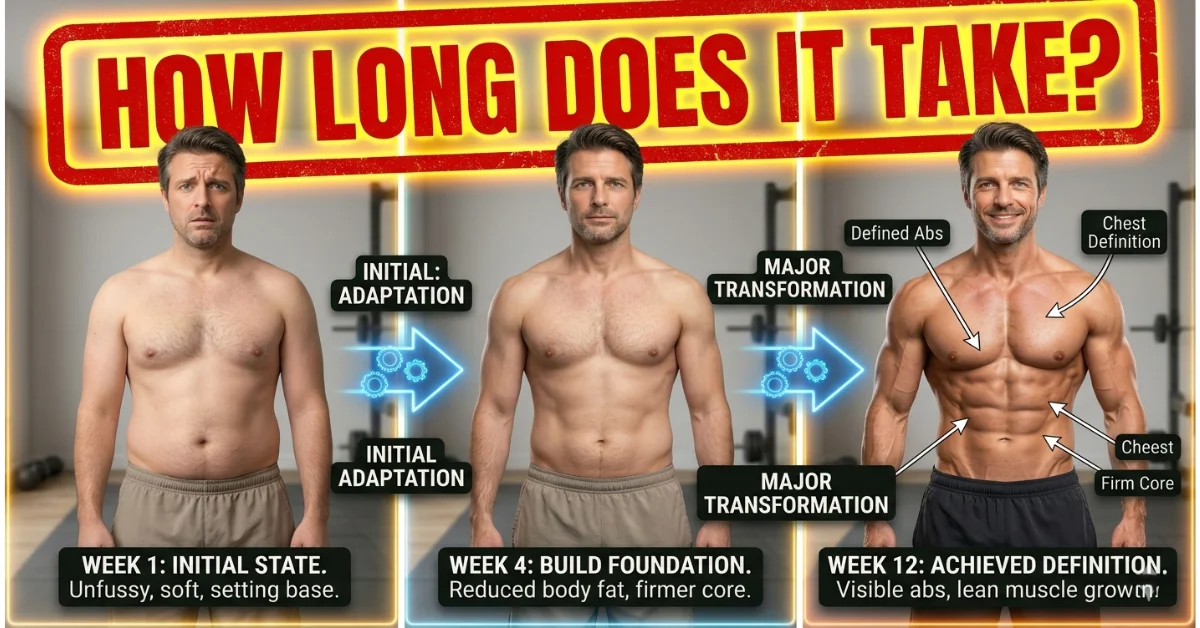
The honest answer is — how long it takes to get fit depends on your starting point, your consistency, and what “fit” actually means to you. This guide gives you the real science, the real timeline, and zero gym myths.
What “Getting Fit” Actually Means — And Why It’s Different for Everyone
Most people picture a flat stomach or bigger arms when they think about getting fit. But fitness is far more layered than that.
Getting fit means your body performs better — not just looks better. It means climbing stairs without gasping. Carrying groceries without strain. Sleeping deeper. Feeling sharper mentally.
According to Healthline, how long it takes to see fitness results depends entirely on what your goal actually is. Cardiovascular endurance, muscle strength, fat loss, and flexibility all follow different timelines.
Fitness Is Not One-Size-Fits-All — Your Starting Point Changes Everything
A sedentary person who hasn’t exercised in years will feel results far faster than someone already moderately active.
Jo Clubb, sports science consultant and founder of Global Performance Insights, explains: people who are sedentary or physically inactive have the greatest potential to see change — sometimes within just one to two weeks.
Nicole Chapman, personal trainer and founder of the Power of Mum fitness app, adds: ” Most people start feeling fitter sooner than they expect — often before any visible change appears.
Cardiovascular Fitness vs. Muscle Strength vs. Body Composition — Which Are You Chasing?
Cardiovascular fitness improves fastest — you’ll feel less breathless within 2–3 weeks of consistent cardio.
Muscle strength typically requires 4–6 weeks to show measurable improvement, according to Jennifer Burnham, certified athletic trainer at Henry Ford Health.
Body composition changes — visible muscle definition and fat reduction — generally appear between 4 and 8 weeks with consistent training and proper nutrition, per Alchemy Personal Training.
Why Your Nervous System Gets Fit Before Your Body Does
When you start exercising, the first adaptation isn’t muscular. It’s neurological.
Jo Clubb explains: “Initial improvements to exercise are largely driven by changes in the nervous system. The Central Nervous System (CNS) adapts to the new stimulus to try to move more efficiently.”
In plain terms, you haven’t built bigger muscles yet in week one. But your brain is already talking to your muscles more efficiently. That’s why things feel easier within the first two weeks — even before your body physically changes.
This neuromuscular adaptation is the foundation on which everything else is built.
The Real Science Behind How Long It Takes to Get Fit
A frequently cited 2004 University of Wisconsin study published in the Journal of Strength and Conditioning Research put 25 sedentary men through 6 weeks of exercise. After 6 weeks, no visible change in appearance was rated by external panelists. Objective fitness markers also showed minimal improvement.
Six weeks is not enough to transform your body. Anyone promising otherwise is selling you a myth.
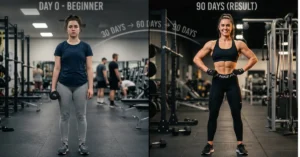
Real, sustainable fitness results take a minimum of 3–4 months of consistent effort — and a full year for dramatic transformation.
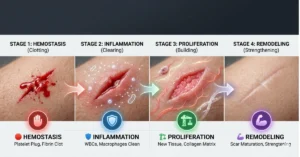
For more info: How Long Does a Cut Take to Heal? Day-by-Day Timeline, Healing Stages & Expert Tips
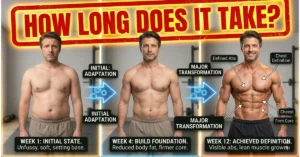
The Realistic Fitness Timeline — Week by Week & Month by Month
Weeks 1–2 — What Happens Inside Your Body First
You won’t see much. But you’ll feel something shifting.
Jamie Logie, personal trainer and founder of Wellness Regained, notes that within 2 weeks, beginners start feeling the benefits. Every day tasks become slightly easier. Energy levels tick upward. Sleep quality improves.
Behind the scenes, your CNS is rewiring. Your heart is pumping more efficiently. Your mitochondria — the energy factories inside your muscle cells — are beginning to upregulate.
What to focus on in weeks 1–2: Show up. Don’t overthink intensity. Build the habit before you build the physique.
Weeks 4–8 — When You Start Seeing & Feeling Real Changes
Jennifer Burnham at Henry Ford Health states clearly: it takes about 4–6 weeks of regular exercise to increase muscle strength and cardiovascular endurance measurably.
By week 6–8, clothes fit differently. Stamina increases noticeably. Recovery between sets gets faster.
A 2007 JAMA study placed sedentary women into exercise groups at varying intensities. Women at the highest intensity saw an 8% improvement in cardiovascular fitness after 6 months. Low-intensity exercisers saw a 4% improvement.
At Krav Maga Worldwide, fitness director Tina Angelotti reports seeing results from students within 2 weeks — because their classes run at very high intensity levels.
Months 3–6 — Visible Body Transformation & Strength Milestones
By month 3, your life looks noticeably different.
Jennifer Burnham says: By 12 weeks, outward improvements are typically visible. Muscle tone is clear. Cardiovascular endurance has jumped. Resting heart rate may have dropped.
Jo Clubb notes that after a few months, the body begins adapting at a structural level — increasing in actual muscle size and strength, beyond just neurological efficiency.
Alchemy Personal Training confirms: a complete body transformation requires a minimum of 3–6 months, depending on workout intensity and nutritional consistency.
Month 12 & Beyond — Where Consistency Pays Off Completely
Justin Fauci, co-founder of Lean Muscle Project, states: after one full year of consistent training and proper diet, most people can achieve a lean, muscular physique with a visible six pack.
After 12 months, strength and endurance are significantly higher than when you began. Recovery is quicker. The body works together more efficiently — creating genuine physical resilience.
The year-one milestone is where fitness stops being something you do and starts being who you are.
The 6 Factors That Decide How Fast You Get in Shape
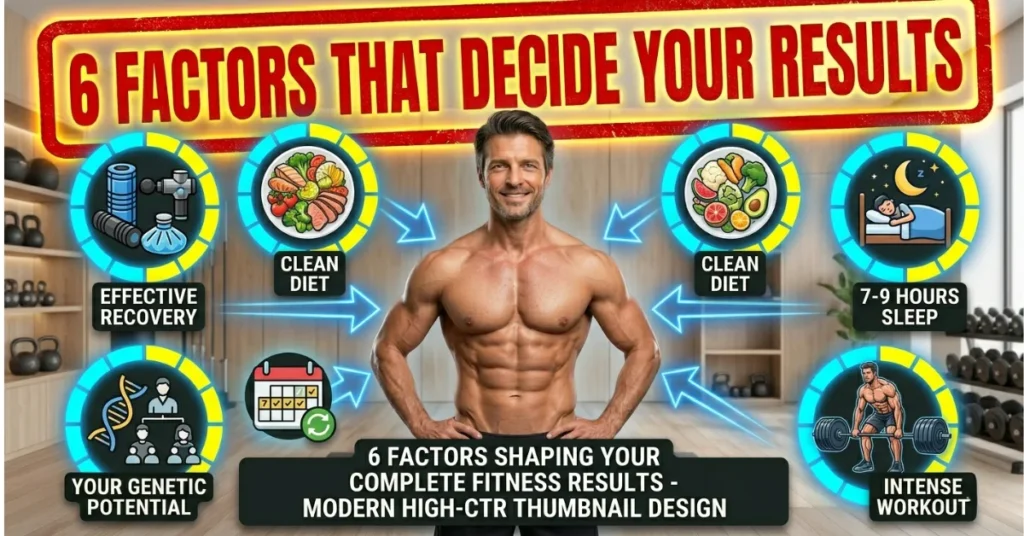
Why do two people follow the same program and get completely different results? These six factors explain everything.
Starting Fitness Level & Training History — The Muscle Memory Advantage
If you’ve trained before — even years ago — your muscles retain a physiological memory of that training.
A 2011 study in Clinical Physiology and Functional Imaging found that beginners who took a 3-week break mid-program achieved similar results as those who trained through without interruption.
Justin Fauci explains: when you undergo resistance training, you permanently change the physiology of your muscle cells — even if you stop training for long periods. This muscle memory makes returning exercisers progress faster than absolute beginners.
Exercise Type & Intensity — HIIT vs. Strength Training vs. Walking
HIIT produces the fastest cardiovascular improvements but carries a higher injury risk for beginners. Strength training builds lean muscle and increases metabolic rate long after the workout ends. Walking meaningfully improves cardiovascular health when done consistently.
Eliza Kingsford, director of Wellspring Camps, explains: exercising at a perceived exertion level of 6 produces different results than someone at a level 9. Both improve — but the timeline is very different.
Alchemy Personal Training recommends: strength training 2–3 times per week + cardio 3–5 times per week + flexibility work to prevent injury.
Nutrition, Sleep & Recovery — The Hidden Accelerators Nobody Talks About
Exercise is only one-third of the equation.
A high-protein, nutrient-dense diet accelerates muscle repair, supports fat loss, and sustains energy levels throughout the day.
Alchemy Personal Training recommends 7–9 hours of sleep per night to allow muscles to repair and grow. Cutting sleep short cuts your results short — regardless of how hard you train.
Jennifer Burnham calls rest days “active recovery days” — not days of doing nothing, but yoga, swimming, light walking, or foam rolling to keep blood flowing without adding stress.
Age, Hormones & Biology — What Changes After 35 & 50
From the age of 35, the body begins losing muscle mass and bone density gradually. At menopause, this rate accelerates.
Linda Dylewicz, PT, Director of Rehabilitation and Sports Medicine at Reliant Medical Group, states clearly: ” You can get in shape no matter how old you are and how much time you’ve taken off. It just requires patience and a realistic plan.
Older adults may take 20–30% longer to see the same results — but the health benefits, including reduced chronic disease risk, improved cognitive function, and better mobility, are equally powerful.
The Biggest Gym Myths Slowing Your Fitness Results
These myths don’t just slow results — they cause people to quit entirely.
The 6-Week Transformation Myth — What Science Actually Says
Lisa Snow, certified personal trainer and president of On the Mend Customized Fitness, delivers the reality: “If a gym, trainer, or class promises to make all your dreams come true in six weeks, run — don’t walk — in the other direction.”
The 2004 University of Wisconsin study confirmed: after 6 weeks of structured exercise, a panel of raters saw no visible change in participant appearance. Objective fitness markers also failed to show significant improvement.
Six weeks build the foundation. It doesn’t complete the house. Real transformation is a 3–12 month process.
“More Hours = More Results” — Why 3 Hours at the Gym Can Hurt You
Longer workouts do not automatically mean better results. This is one of the most damaging myths in fitness culture.
The ACSM (American College of Sports Medicine) confirms that fitness can be maintained with as little as one session per week of moderate-to-hard intensity exercise.
Overtraining syndrome — the physiological state where excessive training produces declining performance — is real and common. Symptoms include persistent fatigue, increased injury risk, declining strength, disrupted sleep, and suppressed immunity.
Optimal training for most adults: 45–60 minutes per session, 4–5 days per week, with proper rest between sessions.
Cardio vs. Weights Debate — The Truth Behind Fat Loss & Muscle Gain
Cardio burns calories during the workout. Strength training burns calories during AND after — because building lean muscle raises your resting metabolic rate permanently.
A 2007 European Journal of Applied Physiology study tracking marathon training found participants increased their VO2 max by 24% after 9 months — proving cardio’s power for cardiovascular transformation.
But for body composition, strength training consistently outperforms cardio. Every pound of muscle you build burns additional calories at rest, making fat loss progressively easier.
The smartest approach: combine both. Strength training 2–3x/week + cardio 3–5x/week. This is the framework recommended by Alchemy Personal Training, Henry Ford Health, and GoodRx health experts alike.
The Scale Lie — Why the Number Doesn’t Show Real Fitness Progress
The scale is one of the least reliable measures of fitness progress. Yet it’s the one most people obsess over.
Muscle is denser than fat. As you build lean muscle and lose fat simultaneously, your weight may stay the same — or even increase — while your body composition improves dramatically.
Better metrics to track: resting heart rate, workout performance (more reps, heavier weights), energy levels, sleep quality, clothing fit, and body measurements — not just weight.
Samantha Clayton, Senior Director of Worldwide Fitness Education at Herbalife, frames it perfectly: the mental benefits of getting active are even more important than the external changes most people obsess over.
How to Get Fit Faster — Without Burning Out or Getting Injured
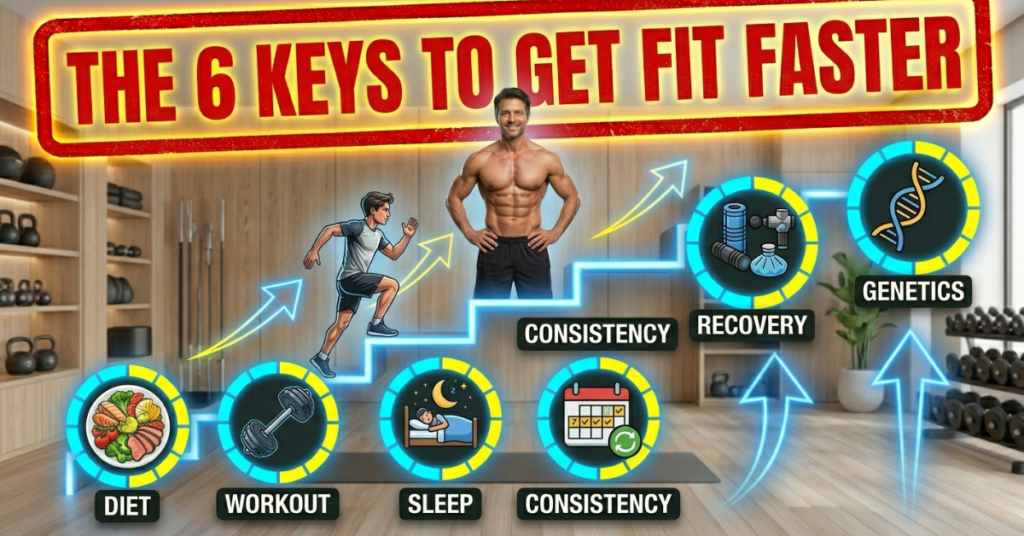
Progressive Overload — The One Principle That Drives Every Result
Progressive overload is the single most important principle in fitness. Without it, progress stalls.
It means gradually increasing the challenge placed on your body — more weight, more reps, longer duration, shorter rest intervals, or more complex movement patterns.
Jo Clubb uses the acronym SPORT with her clients:
- S — Specific: your body adapts to exactly what it’s being asked to do
- PO — Progressive Overload: gradually increase the stimulus to keep adapting
- R — Reversibility: if you don’t use it, you lose it
- T — Tedium: training needs variety to prevent boredom and overuse injury
Jennifer Burnham explains: once you find the sweet spot where your workout no longer feels challenging — typically 1–2 weeks — gradually make it harder. That’s when growth happens.
Exercise Snacking — How Short Bursts of Activity Add Up Fast
Exercise snacking — short bursts of activity spread throughout the day — has been validated by research in Exercise and Sports Sciences Review (PubMed) as nearly as effective as dedicated exercise sessions for certain fitness outcomes.
Dr. Reem Hasan of Vista Health recommends starting with manageable bursts: a short walk during lunch, stretching before bed, and taking stairs instead of the elevator.
What exercise snacking looks like in practice:
- 10 push-ups before breakfast
- A 10-minute brisk walk after lunch
- 20 bodyweight squats before dinner
- Stretching while watching TV
Done consistently, these micro-sessions accumulate into real cardiovascular and muscular adaptations over time.
Active Recovery Days — Why Rest Makes You Fitter, Not Weaker
Rest is where fitness is actually built. Training creates the stimulus. Recovery creates the adaptation.
During rest, your body repairs micro-tears in muscle fibers — rebuilding them slightly thicker and stronger. Skip recovery, and you accumulate damage without building back stronger.
A 2000 study in Medicine and Science in Sports and Exercise found that young people lost only 8% of strength after 31 weeks of inactivity. Older people lost 14%. The body is resilient — but continuous movement always wins.
Optimal recovery schedule: train 4 days, active recovery 2 days, full rest 1 day.
SMART Fitness Goals — The Framework That Keeps You on Track
Vague goals produce vague results. “I want to get fit” is not a goal. It’s a wish.
Alchemy Personal Training recommends the SMART framework:
- Specific: What exactly do you want to achieve?
- Measurable: How will you know when you’ve achieved it?
- Achievable: Is it realistic, given your current fitness level?
- Relevant: Does it align with your broader health priorities?
- Time-bound: What’s your deadline?
Example SMART goal: “I want to run a 5K in under 30 minutes within 10 weeks, training 4 days per week.”
Nicole Chapman summarizes it best: “Short, manageable workouts that you repeat regularly will take you much further than pushing yourself hard and then stopping because it feels unsustainable.”
FAQ — Your Top Questions About How Long It Takes to Get Fit Answered
How long would it take for me to get fit?
It depends on your starting point and your definition of fit. According to Jennifer Burnham at Henry Ford Health, it takes about 4–6 weeks of regular exercise to increase muscle strength and cardiovascular endurance, training approximately 4 days per week. By 12 weeks, outward improvements are typically visible. Jamie Logie of Wellness Regained suggests about 2 months of working out most days to reach a moderate fitness level from scratch. A meaningful transformation takes 3–6 months, while a dramatic, sustained transformation takes 12 months or more.
How long does it take to get a fit body?
A visibly fit body typically requires 3–6 months of consistent effort. Visible changes generally begin appearing between 4–8 weeks with regular exercise and proper nutrition, per Alchemy Personal Training. Justin Fauci of Lean Muscle Project notes that after one full year of consistent training, most people achieve a lean, muscular physique with visible muscle definition. The foundation is consistency over intensity — showing up regularly matters more than any single workout.
Can I get in shape in 2 months?
Yes — but with realistic expectations. According to Nikki Glor of NikkiFitness, if you haven’t exercised in 10 years, it takes about 2 months of working out most days to reach a moderate fitness level. By 8 weeks, you’ll notice meaningful changes in stamina, energy, and strength. A dramatic body composition change requires more time. Two months of consistent effort will make you feel substantially fitter and healthier. The visible six-pack takes closer to a year. Manage expectations, celebrate milestones, and keep going.
What is the 3-3-3 rule at the gym?
The 3-3-3 rule is a structured workout framework that many fitness coaches use to build balanced strength. It typically refers to: 3 sets of 3 exercises targeting 3 different muscle groups per session. Some variations describe it as 3 workouts per week, each lasting 30–45 minutes, with 3 minutes of rest between heavy sets. The core principle is simple: a manageable structure — avoiding the trap of overcomplicated programming that leads to burnout. The ACSM recommends that beginners focus on compound movements, proper form, and progressive overload — all principles the 3-3-3 framework supports well.
What muscle is hardest to grow?
Calves are widely considered the most stubborn muscle group to develop — primarily because of their high proportion of slow-twitch muscle fibers, which are more resistant to hypertrophy (growth). The calves are also engaged in low-level activity all day, just from walking and standing, making them highly adapted to endurance loads. Other notoriously difficult muscles include the forearms and the upper chest. According to trainers at Alchemy Personal Training and Henry Ford Health, the solution for stubborn muscles is high frequency, high volume training with varied angles — combined with adequate protein intake and recovery.
Is 3 hours at the gym ok?
For most people, 3 hours at the gym is counterproductive — not beneficial. Research and clinical guidance from Jennifer Burnham at Henry Ford Health and the ACSM consistently show that 45–90 minutes of focused training is optimal for most fitness goals. Beyond that, the body enters a state of diminishing returns — cortisol rises, testosterone drops, and overtraining syndrome risk increases significantly. Exception: endurance athletes training for marathons may require longer sessions — but these are structured and recovery-focused. For the average gym-goer, quality and consistency always outperform duration.
Conclusion
How long does it take to get fit? You’ll feel better in 2 weeks, see real changes in 4–8 weeks, and transform your body in 3–12 months — depending on how consistently you show up.
There is no 6-week miracle. The scale doesn’t tell the full story. And 3 hours at the gym won’t accelerate what proper programming and recovery can achieve in 45 minutes.
The research from Henry Ford Health, Healthline, ACSM, GoodRx, and exercise scientists like Jo Clubb and Jennifer Burnham all point to the same truth: consistency beats intensity, every single time.
The best workout is the one you actually do — again and again and again.