Most people want to lose weight fast. That is completely understandable. But the number one mistake people make is having no idea how long it actually takes — and then quitting when the scale does not move fast enough.
This guide gives you exact, realistic timelines for losing 5, 10, and 20 pounds. It also covers why your body loses weight differently than your friend’s — and what most articles completely miss.
How Weight Loss Actually Works — The Science Behind Losing 5, 10, or 20 Pounds
Before you look at timelines, you need to understand the basic engine behind weight loss. It comes down to one thing: your body needs to burn more calories than it takes in. This is called a calorie deficit.
Calorie Deficit: The Core Driver of Weight Loss
According to the CDC, losing 1 to 2 pounds per week is the safe and sustainable target. To lose 1 pound of fat, you need a deficit of roughly 3,500 calories. That means cutting about 500 calories per day leads to approximately 1 pound of loss per week.
Do not slash 1,500 calories at once. That backfires. Small, steady deficits work better long-term.
BMR, NEAT, and TEF — Why Your Body Burns Calories Differently
Your body burns calories through three main channels. First is your Basal Metabolic Rate (BMR) — the calories used just to keep you alive (breathing, heart pumping). Second is the Thermic Effect of Food (TEF) — energy used to digest what you eat. Third — and this is what competitors rarely talk about — is Non-Exercise Activity Thermogenesis (NEAT).
NEAT is all the movement you do outside the gym — walking to your car, standing, fidgeting. Research shows NEAT can burn an extra 300–2,000 calories per day depending on your lifestyle. This is a massive variable most weight loss articles completely ignore.
Why the First Week Looks Different (Water Weight vs. Fat Loss)
Many people drop 3–5 pounds in the first week. That feels amazing — but most of it is water weight, not fat. When you cut carbohydrates or calories, your body releases stored glycogen. Each gram of glycogen holds about 3 grams of water.
Once this initial drop slows down, real fat burning begins. This is why week 2 and 3 feel harder — the scale moves slower even though your body is doing real work.
Key Factors That Affect How Long It Takes to Lose Weight
Two people can follow the exact same plan and get very different results. That is because weight loss is not one-size-fits-all. Here are the real factors that control your timeline.
Age, Sex, and Starting Weight
Men generally have more muscle mass than women, which means a higher BMR and faster calorie burning at rest. A 2018 study of over 2,000 people found that men lost 16% more weight than women on the same low-calorie diet.
As you age, muscle mass decreases and metabolism slows. This is not a reason to give up — it just means adjusting your strategy. Strength training becomes even more important after age 35.
Your starting weight also matters. A heavier person creates a larger calorie deficit doing the same activity as a lighter person, so initial weight loss is often faster for those with more to lose.
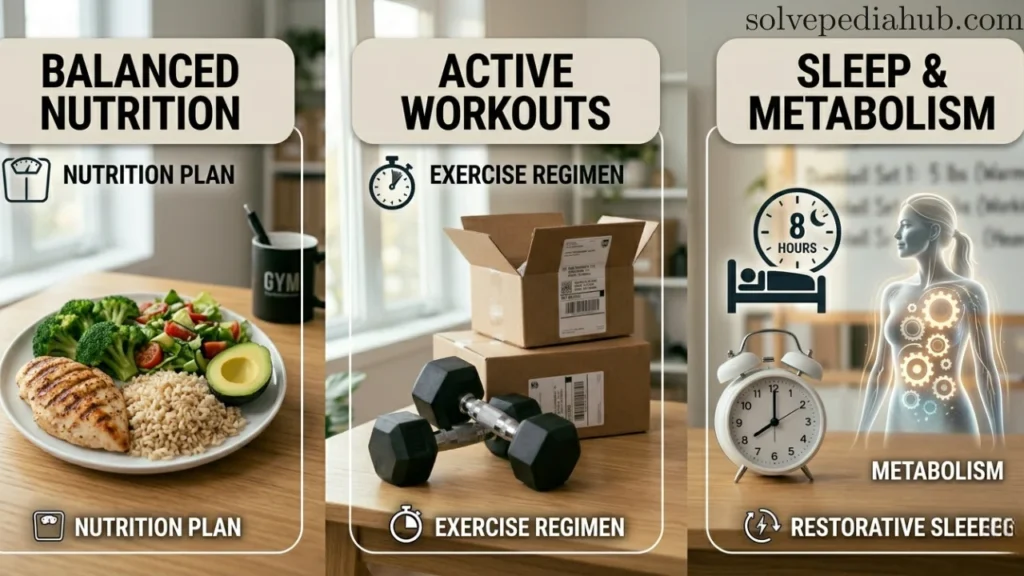
Sleep, Stress, and Hormones — The Hidden Variables Competitors Ignore
This is the part most blogs skip. Poor sleep directly increases hunger hormones — specifically ghrelin (hunger) and leptin (fullness). Even one night of bad sleep can push you toward high-calorie food choices the next day, according to Baptist Health research.
Chronic stress raises cortisol, a hormone that promotes fat storage — especially around the belly. Managing stress through walks, breathing, or sleep is not a soft suggestion. It is a fat loss strategy.
Hormonal changes like insulin resistance or going through menopause can also slow fat loss significantly, even when diet and exercise look perfect on paper.
Medical Conditions That Slow Weight Loss
Certain health conditions create real physiological barriers to weight loss. Hypothyroidism slows your metabolic rate because your thyroid produces fewer metabolism-regulating hormones. Polycystic ovary syndrome (PCOS) and Cushing syndrome also make the body resistant to shedding fat.
Depression medications, blood pressure drugs, and some antihistamines are also linked to weight gain or slowed loss. If you are doing everything right and still stuck, a conversation with your doctor is not optional — it is essential.
Genetics and Family History
There is a well-established genetic component to obesity and metabolic rate. According to the NIH, family history of obesity affects how your body stores fat and regulates hunger signals. Genetics is not destiny — but it does shape the playing field.
How Long Does It Realistically Take to Lose 5, 10, and 20 Pounds?
Here is the part you actually came for. Below is a realistic, science-backed timeline based on a safe rate of 1–2 pounds per week and a 500–750 calorie daily deficit.
| Goal | Safe Pace | Timeline | Calorie Deficit/Day |
| Lose 5 lbs | 1–2 lbs/week | 2.5 – 5 weeks | ~500 cal/day |
| Lose 10 lbs | 1–2 lbs/week | 5 – 10 weeks | ~500–600 cal/day |
| Lose 20 lbs | 1–2 lbs/week | 10 – 20 weeks | ~500–750 cal/day |
How Long to Lose 5 Pounds — Week-by-Week Breakdown
At a rate of 1–2 lbs per week, losing 5 pounds takes 2.5 to 5 weeks. This is achievable for most people through a moderate calorie deficit and light exercise.
Week 1: You may lose 2–4 lbs — mostly water weight and glycogen. Do not get too excited or too scared when this slows down.
Week 2–3: Real fat burning starts. Expect 1–1.5 lbs of actual fat loss per week if your deficit and movement are consistent.
At this point, many people already notice their clothes fitting a bit differently — even if the number on the scale seems slow.
How Long to Lose 10 Pounds — Realistic Timeline at 1–2 lbs/Week
Losing 10 pounds takes 5 to 10 weeks at a healthy pace. Most people in the USA trying to lose 10 lbs with a combination of diet and exercise hit this goal in around 6–8 weeks.
This aligns with what Baptist Health states — at 1–2 lbs per week, six to eight weeks is when visible results typically appear, especially for people who see you after a longer gap.
The Mayo Clinic recommends targeting 500–750 fewer calories per day, combined with at least 30 minutes of aerobic exercise most days. This combination is your most reliable path to losing 10 lbs without muscle loss.
How Long to Lose 20 Pounds — What to Expect Month by Month
Losing 20 pounds safely takes 10 to 20 weeks — roughly 2.5 to 5 months. Rush this and you risk muscle loss, nutrient deficiencies, and the dreaded yoyo effect.
Month 1: Expect 6–10 lbs of loss (including water weight).
Month 2: Fat loss is now primary. 4–6 lbs is realistic.
Month 3–5: Consistent 1–2 lb weekly loss. Progress feels slower but is more meaningful — pure fat.
According to Healthline, research supports aiming to lose 5–10% of body weight in the first 6 months. For a 200-lb person, that is 10–20 lbs — completely doable.
Why Weight Loss Is Not Linear — Plateaus, Stalls & What to Do
Almost everyone hits a weight loss plateau. You are eating the same, moving the same — but the scale stops. This is not failure. This is metabolic adaptation.
Research published in the Journal of Strength and Conditioning Research confirms that your body actively fights back against weight loss by slowing metabolism and increasing hunger. This is a survival mechanism — not a personal attack.
• Recalculate your calorie needs — your deficit shrinks as you lose weight
• Add resistance training to preserve muscle mass and keep BMR higher
• Increase NEAT — take more steps, stand more, move casually throughout the day
• Try a diet break — eating at maintenance for 1–2 weeks can reset hormones and reduce metabolic adaptation
The Fastest Safe Way to Lose 5, 10, or 20 Pounds
“Fastest” does not mean crash dieting. It means being strategically consistent. Here is what science and clinical experience say actually works.
How Many Calories to Cut Per Day (500–750 Deficit Rule)
A 500-calorie daily deficit is the most cited and safest starting point. It creates roughly 1 pound of fat loss per week without triggering significant metabolic slowdown or muscle loss.
Cutting more than 1,000 calories per day is not recommended long-term. According to Healthline, very low calorie diets can cause electrolyte imbalances, bone density loss, and significant psychological stress — including disordered eating patterns.
Best Diet Approach — No Single Diet Wins, But These Principles Do
A 2020 review of 121 studies compared 14 popular named diets — keto, Mediterranean, low-fat, intermittent fasting — and found that no single diet was superior for long-term fat loss. What matters is consistency and calorie control.
What every effective diet has in common:
• Lean proteins (chicken, fish, legumes) — keep you full, preserve muscle
• Vegetables and whole grains — high fiber, low calorie density
• Limited added sugars, refined carbs, and processed foods
• Adequate hydration — water supports metabolism and reduces false hunger
The NHS recommends making small, sustainable swaps rather than complete overhauls — like replacing sugary drinks with water and using smaller plates for portion control.
Exercise That Actually Speeds Up Weight Loss
The Mayo Clinic recommends at least 30 minutes of aerobic activity most days — brisk walking, cycling, or swimming. But for faster fat loss, combining cardiovascular training with strength training is significantly more effective.
Strength training builds lean muscle mass. Muscle is metabolically active — meaning it burns more calories even at rest. Studies show that resistance training 2–3 times per week can meaningfully increase your BMR and help you break through plateaus.
Baptist Health recommends 45–60 minutes of training four times per week, combining cardio and resistance work, for the most effective weight loss results.
What Competitors Don’t Tell You — NEAT’s Massive Role
Most articles focus entirely on gym workouts. But NEAT — Non-Exercise Activity Thermogenesis — is potentially your biggest lever. Standing instead of sitting, taking stairs, walking while on calls — these micro-movements add up to 200–500+ additional calories burned per day for active people.
A sedentary desk job can cut your total daily energy expenditure by 30% compared to a physically active lifestyle — even if you work out one hour a day. Fix your daily movement, not just your gym schedule.
First Signs You Are Losing Weight (Even Before the Scale Moves)
The scale is the least sensitive tool for tracking fat loss. Here is what actually signals your body is changing — often weeks before numbers shift.

Physical Signs — Clothes Fitting Looser, Reduced Bloating
The first physical sign most people notice is that their clothes feel looser — especially around the waist, hips, and thighs. This happens because fat cells shrink before total body weight drops noticeably.
Reduced bloating and puffiness is another early indicator. When you cut processed foods and refined sugars, your body retains less water, and inflammation decreases.
Internal Signs — Better Energy, Improved Sleep, Less Hunger
Many people report feeling more energetic within 1–2 weeks of eating cleaner and reducing their calorie intake. This is because blood sugar levels stabilize and the body is no longer constantly processing excess food.
Improved sleep quality is another sign. Less body fat — particularly visceral fat around the abdomen — reduces the risk of sleep apnea and nighttime discomfort.
You may also notice you are less hungry than expected. When your diet includes enough fiber, lean protein, and healthy fats, satiety hormones like leptin begin to regulate more effectively.
When to Expect Visible Results After Starting Your Journey
Week 1–2: Reduced bloating, slightly looser clothes, better energy.
Week 3–4: Visible face and neck slimming. People who see you regularly may start noticing.
Week 6–8: This is the window Baptist Health identifies as when most people — especially those seen after a gap — clearly notice the change.
Week 10+: Significant body recomposition. Muscle definition becomes visible if strength training is included.
FAQ — Your Top Questions About Weight Loss Timelines Answered
Can I lose 10 kg in 1 month?
Technically possible — but not safely. Losing 10 kg (22 lbs) in one month would require an extreme daily deficit that risks serious muscle loss, nutrient deficiencies, and metabolic damage. The CDC and Mayo Clinic both recommend 1–2 lbs (0.5–1 kg) per week as the safe range. A realistic and healthy timeline for losing 10 kg is 10–20 weeks.
How long does it normally take to start losing weight?
Most people begin losing measurable weight within the first 1–2 weeks of a consistent calorie deficit. The first week often shows 2–5 lbs of loss — mainly water weight. Real fat loss becomes consistent from week 2 onward. Visible results in the mirror or in clothing typically appear around weeks 4–6.
What are the first signs of losing weight?
The earliest signs are often non-scale: clothes fitting looser around the waist, reduced bloating, improved energy levels, and better sleep. The face and neck tend to slim down before the belly. Most people notice these changes in weeks 2–4, even when the scale has not moved dramatically.
How to lose 5 kg in a month?
Losing 5 kg (about 11 lbs) in one month is at the upper edge of what is considered safe. It requires a deficit of approximately 600–750 calories per day, consistent aerobic exercise (30+ minutes daily), strength training 2–3 times per week, high protein intake to prevent muscle loss, and strong sleep and stress management. It is doable for some people — but 4–6 weeks is a more realistic and sustainable timeline for most.
Conclusion
Losing 5 pounds takes 2–5 weeks, 10 pounds takes 5–10 weeks, and 20 pounds takes 10–20 weeks at a safe, sustainable pace. There is no shortcut that skips this.
What separates people who succeed from those who quit? They understand that weight loss is not linear, they manage sleep and stress alongside diet, and they do not wait for the scale to validate their effort. Your body is changing before the number confirms it. Focus on the process — consistent calorie deficit, daily movement, quality food, and sleep — and the results will follow. If you are unsure where to start, consult a registered dietitian or healthcare professional for a plan tailored to your body