You trimmed too much. Or you are just ready for longer hair. Either way, you want one answer: how long does it take to grow 1, 3, or 6 inches of hair? The truth is simpler than most people think — and more predictable than you would expect.
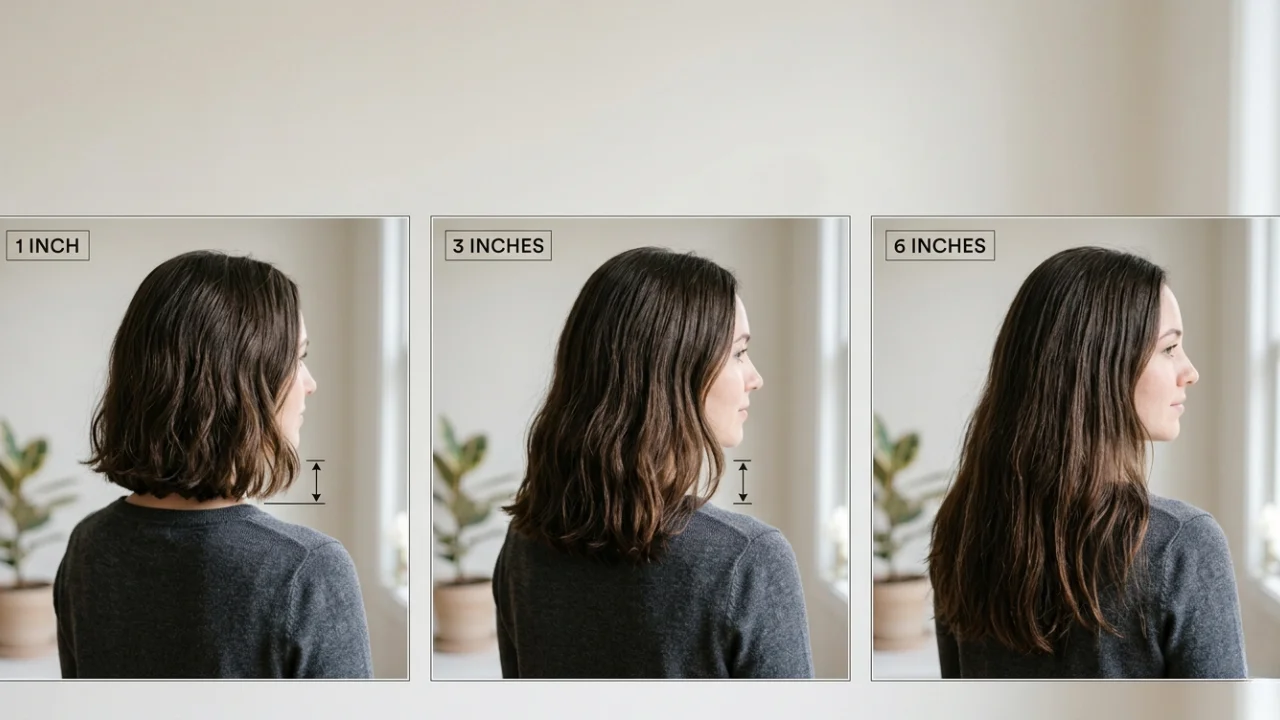
This guide covers everything — from the biology of hair growth to exact timelines, ethnic differences, shrinkage, and the habits that secretly steal your length. Let’s break it all down.
How Fast Does Hair Actually Grow?
Your hair does not grow randomly. It follows a fixed biological rhythm that science has studied in detail.
According to the American Academy of Dermatology (AAD), the average person grows about 0.5 inches (1.25 cm) of hair per month. That equals roughly 6 inches per year under healthy conditions. The CDC confirms the same figure — 0.50 inches per month, or one-eighth of an inch every single week.
Hair Growth Rate by Age, Gender and Ethnicity
Research published in the International Journal of Dermatology found clear ethnic differences in hair growth rates:
| Hair Type (Ethnicity) | Monthly Growth | Yearly Growth |
| Asian hair | Up to 0.8 inches/month | ~6.3 inches/year |
| Caucasian hair | ~0.5 inches/month | ~5 inches/year |
| African hair | ~0.2 inches/month | ~4.3 inches/year |
These differences come down to follicle shape, strand thickness, and the angle of growth — not effort or hair care alone.
What the Science Says About Hair Growth Speed
Hair grows through a biological cycle with three distinct stages:
- Anagen phase — the active growth stage. Lasts 2 to 7 years. About 85–90% of your scalp hair is in this phase right now.
- Catagen phase — a short 2-week transition. The follicle shrinks and detaches from its blood supply.
- Telogen phase — the resting stage lasting about 3 months. Hair sheds, and a new cycle begins.
The longer your anagen phase, the longer your hair can grow. Genetics control this more than anything else.
How Long Does It Take to Grow 1, 3, or 6 Inches of Hair?
Here is the straightforward breakdown based on the 0.5 inches per month average:
| Hair Growth Goal | Estimated Time |
| 1 inch of hair | 6 to 8 weeks |
| 3 inches of hair | 5 to 6 months |
| 6 inches of hair | 12 to 15 months |
| 12 inches of hair | Around 2 years |
For more info: Charge Your iPhone Faster — Real Timing, Every Model & Pro Tips
How Long to Grow 1 Inch of Hair
Growing 1 inch of hair takes approximately 6 to 8 weeks for most people. Faster growers (closer to 0.7 inches per month) may hit 1 inch in about 5 to 6 weeks. Slower growers may need closer to 10 weeks.
This is the most achievable short-term hair goal — and also the timeframe where scalp health matters most.
How Long to Grow 3 Inches of Hair
At the average growth rate, 3 inches of hair takes about 5 to 6 months. This is the milestone most people notice first — hair starts covering the ears, gaining visible length, and behaving differently with styling.
What most articles miss: growing 3 inches does not mean retaining 3 inches. Breakage, split ends, and heat damage can silently eat away your progress. You may grow 3 inches but only keep 1.5 inches if your ends are breaking.
How Long to Grow 6 Inches of Hair
Growing 6 inches of hair takes roughly 12 to 15 months for the average person. According to the Trichological Society, the fastest natural growers could achieve this in as little as 10 to 11 months.
Slower growers — especially those with African hair texture — may need 18 months or more. This is where length retention becomes the real game. Growth is consistent. What changes is how much of that growth you actually keep.
What Slows Down or Speeds Up Hair Growth?
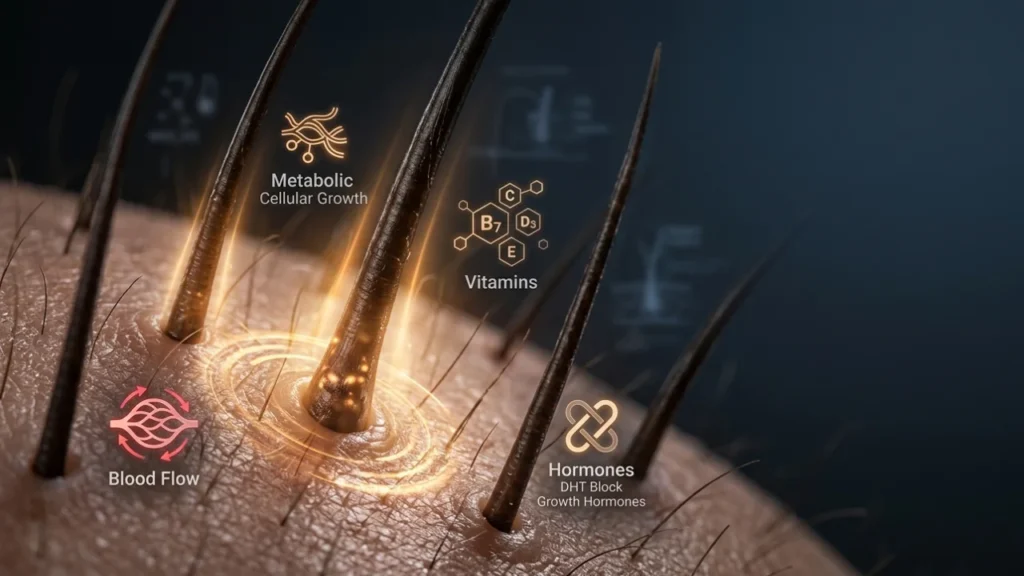
Top Factors That Slow Hair Growth
- Chronic stress — pushes follicles into the telogen phase early. This is called telogen effluvium and causes shedding months after the stressful event.
- Nutrient deficiencies — low iron, vitamin D, zinc, or biotin directly impact the hair growth cycle. A 2017 report in Dermatology Practical & Conceptual confirmed this.
- Overstyling and heat damage — weakens the hair shaft, causing breakage that looks like slow growth.
- Crash dieting — starves the follicle of protein and calories it needs to produce keratin.
- Age — research shows hair growth declines by about 0.4 cm per year starting around age 26.
Proven Ways to Speed Up Hair Growth Naturally
- Eat enough protein — hair is made of keratin, which needs amino acids from dietary protein. Aim for at least 50 to 60 grams daily.
- Scalp massage — a 2019 study found daily scalp stimulation increased hair thickness over 24 weeks by improving blood circulation to the follicles.
- Reduce heat styling — excessive heat weakens the cuticle and causes breakage.
- Minoxidil (Rogaine) — clinically proven to extend the anagen phase and stimulate regrowth.
- Key supplements — biotin, vitamin D, iron, and zinc are the most evidence-backed nutrients. They only help if you have a deficiency.
Hair Growth by Type — Straight, Wavy, Curly and Coily
Curly and coily hair types grow at the same biological rate as straight hair. However, the coil pattern means the hair shrinks significantly when dry — sometimes up to 50 to 75% of its actual length. This creates a frustrating illusion: your hair is growing, but it does not look like it is.
A person with 4C coily hair who grows 6 inches may only see 2 to 3 inches of visible length due to shrinkage. This is biology, not failure.
Does Hair Type Affect Growth Rate?
Slightly. But the bigger issue is shrinkage, not growth speed. Stretching methods like banding, twist-outs, or low-heat blow-drying can help you see your true length without damaging your curl pattern.
How to Measure and Track Your Hair Growth Progress

The 2.25 Rule for Hair Explained
The 2.25 rule for hair is a simple benchmark: the average person grows about 2.25 inches of hair every 4.5 months. It is based on the standard 0.5 inches per month rate and gives you a practical midpoint goal to track progress without waiting a full year.
Simple At-Home Methods to Track Hair Growth
- The tape measure method — measure from root to tip of a specific strand every 4 weeks. Mark the same section each time.
- Monthly progress photos — take a photo from the same angle and lighting each month.
- The pencil test — for short hair, see how far past a pencil placed horizontally your hair now reaches.
When to See a Dermatologist About Slow Hair Growth
If your hair is growing significantly less than 0.25 inches per month, or if you notice sudden shedding, patchy loss, or scalp changes, see a board-certified dermatologist or trichologist. These signs can indicate alopecia areata, androgenetic alopecia, or a hormonal imbalance that needs medical attention.
FAQ — Your Top Hair Growth Questions Answered
Can hair grow 2 inches in a month?
No — not naturally. Growing 2 inches in a month would require four times the biological average. When hair appears to grow this fast, it is usually due to improved length retention or less breakage — not actual accelerated follicle activity.
What makes up 90% of hair?
Keratin — a fibrous structural protein — makes up approximately 90% of each hair strand. The rest consists of water, lipids, pigment (melanin), and trace minerals. This is why protein-rich diets and keratin treatments play such a meaningful role in hair strength.
What is the 2.25 rule for hair?
The 2.25 rule is a hair growth benchmark: the average person grows about 2.25 inches every 4.5 months. It is based on the 0.5 inches per month average and gives a practical midpoint goal for tracking progress.
Can hair grow back in 3 weeks?
It depends on the cause. After a haircut, you may see about 0.375 inches of regrowth in 3 weeks. But if hair was lost due to telogen effluvium, illness, or stress, regrowth typically begins after 2 to 3 months — not weeks.
Why is Gen Z losing hair?
Gen Z is experiencing higher rates of stress-related hair loss than previous generations at the same age. Contributing factors include chronic anxiety, poor sleep, ultra-processed diets, excessive heat styling, and social media-driven comparison stress — all of which push follicles into the telogen phase early.
How to regrow hair 100%?
Full regrowth depends on why hair was lost. If follicles are still alive (as in telogen effluvium), 100% regrowth is achievable with proper nutrition, stress management, and sometimes minoxidil. If follicles are permanently scarred, medical intervention like PRP therapy or hair transplant may be needed. Early action always produces better outcomes.
Conclusion
Growing hair is a slow, steady process — and that is completely normal. 1 inch takes 6 to 8 weeks. 3 inches takes 5 to 6 months. 6 inches takes close to a year. Your genetics, age, ethnicity, and health all shape exactly where you fall in that range.
The biggest mistake people make is focusing only on growth speed and ignoring length retention. You can grow half an inch every month and still have the same length a year later if breakage is stealing your progress.
Take care of your scalp. Eat enough protein. Reduce unnecessary heat. Track your progress monthly. And give your hair the time it actually needs — because there is no shortcut that biology has not already accounted for.