You close your eyes. Five minutes pass. Then ten. Then thirty. How long does it take to fall asleep — and what does your answer say about your health?
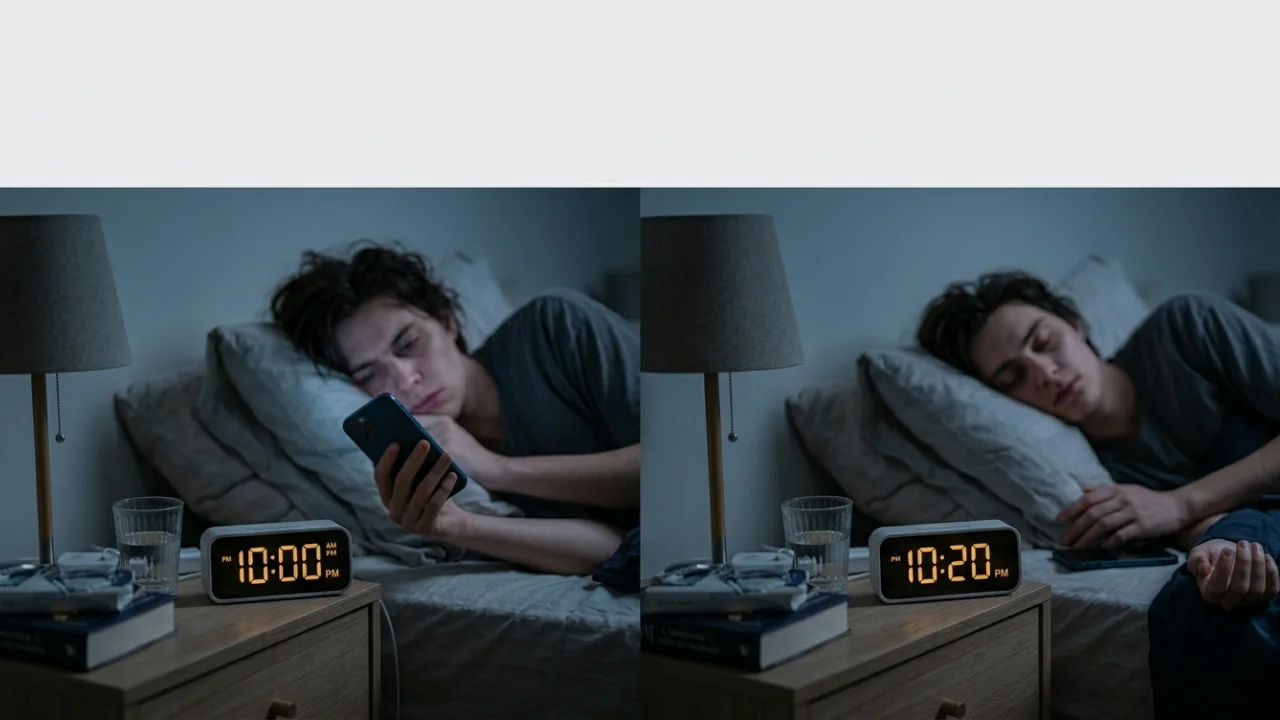
Most adults should drift off in 10 to 20 minutes. If it’s taking you much longer — or much shorter — your body may be sending you a signal worth listening to.
| 10–20 min Normal sleep onset (adults) | >30 min Possible insomnia threshold |
What Is a Normal Sleep Onset Time?
The 10–20 Minute Rule — What Sleep Experts Actually Say
Sleep scientists use a specific term for this: sleep onset latency (SOL). It measures the time from lights-out to the first stage of sleep.
According to the Sleep Foundation, a healthy sleep onset latency falls between 10 and 20 minutes. The Cleveland Clinic echoes this, noting that most people fall asleep within this window under normal conditions.
Falling asleep in under 5 minutes? That’s not a superpower — it’s often a sign of severe sleep deprivation. Taking more than 30 minutes consistently? That points toward a sleep disorder like insomnia.
| Quick Fact The MSLT (Multiple Sleep Latency Test) is the gold-standard clinical tool used to measure how fast someone falls asleep. A score under 5 minutes indicates extreme sleepiness. |
For more info: Boiled Eggs Made Easy: Exact Timing for Soft, Medium & Hard
What Is Sleep Onset Latency and Why It Matters
Sleep onset latency is not just a number. It’s a window into your circadian rhythm, stress levels, sleep debt, and even mental health.
When your body is working correctly, rising levels of adenosine (a sleep-pressure chemical) combine with dropping cortisol and increasing melatonin to ease you into sleep naturally.
Disrupt any one of those — through blue light exposure, late caffeine, or chronic stress — and your sleep onset stretches out uncomfortably.
How Sleep Onset Changes With Age
Your ideal sleep latency shifts across your lifetime. Here is what the research shows:
- Children: Often fall asleep in under 10 minutes due to higher sleep pressure.
- Adults (18–64): The healthy range is 10–20 minutes.
- Older adults (65+): Sleep onset may lengthen slightly due to changes in circadian biology and reduced melatonin production.
- Teenagers: Biologically wired to feel alert later at night due to circadian phase delay, making early bedtimes genuinely hard — not laziness.
Signs of Good Sleep vs Poor Sleep
Knowing how long to fall asleep is only half the picture. Knowing what your sleep onset is telling you — that’s where real insight lives.
7 Signs You Are Falling Asleep the Healthy Way
- You feel naturally drowsy at bedtime — not forced.
- It takes roughly 10–20 minutes from lying down to sleep.
- You don’t watch the clock or feel anxious about sleeping.
- You wake up feeling refreshed, even if you occasionally stir at night.
- You cycle through NREM and REM sleep stages without long interruptions.
- You don’t need an alarm to feel rested on most days.
- You fall asleep at a consistent time each night, supporting a stable circadian rhythm.
7 Warning Signs Your Sleep Onset Is a Problem
- Taking over 30 minutes most nights to fall asleep — a key marker of insomnia.
- Falling asleep in under 5 minutes — often signals serious sleep deprivation or narcolepsy.
- Lying awake with racing thoughts or cognitive arousal — a hallmark of anxiety-driven sleep disruption.
- Needing sleep aids, alcohol, or melatonin supplements every night just to switch off.
- Waking between 2–4 AM and being unable to return to sleep — often tied to cortisol spikes or depression.
- Daytime sleepiness despite 7–9 hours of time in bed — suggests poor sleep quality, not just quantity.
- Tossing, turning, and changing positions repeatedly — your body is not reaching deep sleep (slow-wave sleep) efficiently.
The Difference Between Feeling Tired and Being Sleepy
This distinction matters clinically. Fatigue is physical exhaustion — your muscles ache, your motivation drops. Sleepiness is a specific neurological drive to sleep.
You can feel exhausted but be completely unable to sleep. That’s a sign of hyperarousal — the nervous system stuck in fight-or-flight mode even in bed. This is common in both chronic insomnia and burnout.
| Expert Note If you feel exhausted all day but then become wide awake the moment you lie down, this is called “conditioned arousal” — your brain has learned to associate bed with wakefulness, not sleep. Cognitive Behavioral Therapy for Insomnia (CBT-I) is the most effective evidence-based treatment for this. |
Why Does It Take You So Long to Fall Asleep?
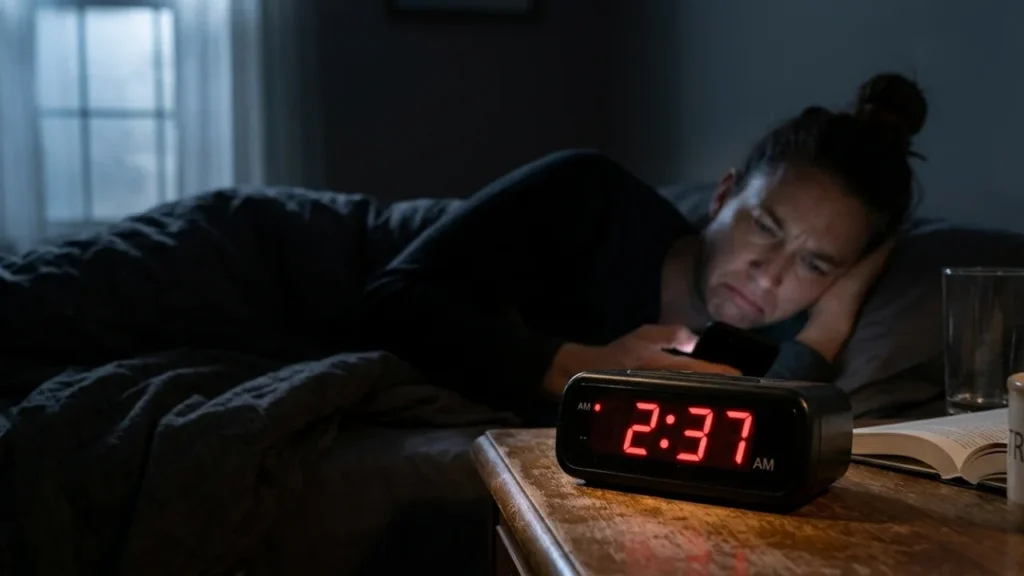
The Role of Cortisol, Melatonin, and Circadian Rhythm
Your body runs on a precise internal clock — the circadian rhythm. It controls when you feel alert and when you feel sleepy, driven largely by light exposure.
In the evening, your brain’s pineal gland releases melatonin — often called the “darkness hormone.” Simultaneously, cortisol (your alertness hormone) drops. This biological handoff is what makes you feel ready to sleep.
Exposure to blue light from screens suppresses melatonin production by up to 50% (Harvard Health). That’s why scrolling before bed genuinely makes it harder to fall asleep — it’s not psychological, it’s biochemical.
How Stress, Anxiety, and Cognitive Arousal Hijack Your Sleep
When stress is high, your body releases cortisol at the wrong time. Your mind races. Cognitive arousal — the technical term for an overactive, worried mind at bedtime — is one of the leading causes of delayed sleep onset in adults.
According to BetterHelp and clinical sleep researchers, anxiety disorders and insomnia are deeply intertwined. Roughly 40% of people with insomnia also have an anxiety disorder.
The problem is self-reinforcing: you worry about not sleeping, which makes sleeping harder, which gives you more to worry about. Sleep specialists call this the “insomnia cycle.”
Lifestyle Triggers Most People Ignore
Beyond screens and stress, these everyday habits silently stretch your sleep onset:
- Caffeine after 2 PM: Caffeine has a half-life of ~5–6 hours. An afternoon coffee can still be circulating in your brain at midnight.
- Irregular sleep schedule: Your circadian clock depends on consistency. Sleeping in on weekends causes “social jet lag” — a documented phenomenon that impairs weekday sleep onset.
- Heavy evening meals: Digestion raises core body temperature. Your body needs to cool down to initiate sleep.
- Alcohol: Though it helps some people fall asleep faster initially, alcohol fragments sleep architecture and suppresses REM sleep.
- ADHD: Research on Reddit’s r/ADHD community and clinical studies confirm that people with ADHD frequently report taking 45–90 minutes to fall asleep due to a phenomenon called “racing thoughts at bedtime.”
What Happens If You Fall Asleep Too Fast?
Falling Asleep in Under 5 Minutes — A Hidden Red Flag
Falling asleep the moment your head hits the pillow feels like a gift. But clinically, it’s often a warning sign.
A sleep onset latency of under 5 minutes on the MSLT diagnostic test is classified as pathological sleepiness by sleep medicine standards. It means your body is so depleted of sleep it can’t even sustain wakefulness for a few minutes.
This level of sleepiness is associated with chronic sleep deprivation, sleep apnea, and narcolepsy — conditions that significantly increase the risk of accidents, cognitive impairment, and long-term health damage.
Sleep Deprivation vs Sleep Disorders — How to Tell the Difference
Both can cause fast or disrupted sleep onset, but the root causes differ:
| Sleep Deprivation | Sleep Disorder | |
| Cause | Not enough hours in bed | Neurological or physiological |
| Fix | More sleep time | Requires diagnosis + treatment |
| SOL | Under 5 minutes | Varies (too fast or too slow) |
| Daytime effect | Sleepy, irritable | Sleepy despite adequate hours |
What Is the MSLT Test and When Do Doctors Use It?
The Multiple Sleep Latency Test (MSLT) is a daytime sleep study conducted in a clinical setting. Patients are given five 20-minute nap opportunities, each two hours apart.
Doctors use it to diagnose narcolepsy, idiopathic hypersomnia, and to objectively quantify excessive daytime sleepiness (EDS). An average latency under 8 minutes is considered clinically significant.
How to Fall Asleep Faster — Science-Backed Strategies
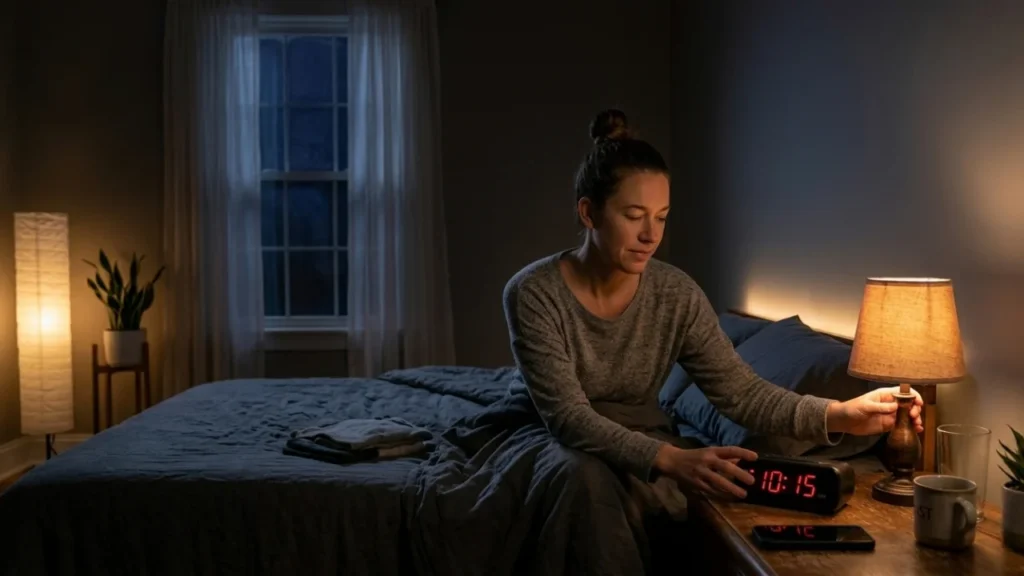
Breathing Techniques That Reduce Sleep Latency
Controlled breathing directly activates the parasympathetic nervous system — your body’s rest-and-digest mode. This lowers cortisol and signals your brain to release melatonin.
- 4-7-8 Method: Inhale 4 seconds, hold 7, exhale 8. Repeat 4 cycles. Developed by Dr. Andrew Weil; shown to reduce anxiety and speed up sleep onset.
- Box Breathing: 4 counts in, hold 4, out 4, hold 4. Used by Navy SEALs to reduce arousal — equally effective at bedtime.
- Diaphragmatic breathing: Slow, deep belly breaths lower heart rate and trigger the relaxation response within minutes.
Building a Wind-Down Routine That Actually Works
A consistent pre-sleep routine trains your brain to recognize that sleep is coming. Think of it as a biological signal — not a luxury.
Research-supported elements of an effective wind-down routine:
- Dim lights 60–90 minutes before bed to stimulate natural melatonin release.
- Stop screens (phones, TV, laptops) at least 30–60 minutes before sleep — or use blue-light blocking glasses.
- Keep bedroom temperature between 65–68°F (18–20°C) — the range where core body temperature drops fastest.
- Try progressive muscle relaxation (PMR): systematically tense and release muscle groups from toes to forehead.
- Write tomorrow’s to-do list before bed. A 2018 Journal of Experimental Psychology study found this reduces cognitive arousal and shortens sleep latency.
Sleep Hygiene Habits That Fix the Root Cause
Sleep hygiene is more than just going to bed early. It’s the full ecosystem of behaviors, environment, and timing that determines whether your body can sleep well.
- Consistent wake time: Wake up at the same time every day — even weekends. This anchors your circadian rhythm more powerfully than any supplement.
- Only use bed for sleep: Working or scrolling in bed trains your brain to associate the space with wakefulness. This is called stimulus control therapy in sleep medicine.
- Get morning sunlight: 10 minutes of natural light within an hour of waking resets your circadian clock and makes evening melatonin release more robust.
- Limit naps: If you nap, keep it under 20 minutes before 3 PM. Longer naps reduce adenosine buildup — the sleep pressure you need at night.
- Avoid caffeine after 2 PM and alcohol within 3 hours of bedtime.
| When to See a Doctor If you take more than 30 minutes to fall asleep most nights for 3+ months, wake frequently and can’t return to sleep, or feel exhausted despite 7–9 hours in bed — speak to a healthcare provider. A sleep specialist can order an overnight polysomnography or MSLT to rule out sleep apnea, narcolepsy, or restless leg syndrome. CBT-I (Cognitive Behavioral Therapy for Insomnia) is now recommended as the first-line treatment over sleep medication by the American College of Physicians. |
FAQs — Your Sleep Questions Answered
What is the 10-5-3-2-1 rule for sleep?
The 10-5-3-2-1 rule is a sleep hygiene countdown. Stop caffeine 10 hours before bed, heavy meals 5 hours before, alcohol 3 hours before, work or screens 2 hours before, and avoid checking your phone 1 hour before bed. It’s a practical framework for protecting your circadian rhythm and reducing cognitive arousal before sleep.
How long does it take a person to fully fall asleep?
Most healthy adults take 10 to 20 minutes to fall into the first stage of NREM sleep. Reaching deep slow-wave sleep (Stage 3 NREM) typically takes about 30 to 45 minutes from the start of sleep. Full REM sleep cycles don’t complete until roughly 90 minutes after sleep onset.
What is the 10-4-3-2-1 rule?
A variation of the sleep countdown rule: avoid caffeine 10 hours before bed, strenuous exercise 4 hours before, large meals 3 hours before, screens and bright lights 2 hours before, and alcohol 1 hour before. Both versions aim to align your behavior with your body’s natural melatonin and cortisol rhythms.
Is it normal to take 45 minutes to fall asleep?
Occasionally, yes — a stressful day or an irregular schedule can push your sleep onset beyond 30 minutes. But if it’s happening most nights, it crosses into clinically significant territory. The Sleep Foundation and Cleveland Clinic both identify consistent latency over 30 minutes as a key diagnostic indicator of insomnia. If this is your pattern, a sleep diary and conversation with your doctor is a smart next step.
Why does Gen Z sleep late?
Multiple factors converge for Gen Z. Biologically, teenagers and young adults experience a circadian phase delay — their melatonin release genuinely shifts later, making early sleep biologically difficult, not just behavioral. Add relentless evening screen exposure, social media, gaming, and academic stress — all of which elevate cortisol and suppress melatonin — and late bedtimes become nearly inevitable. Research published in Sleep Medicine Reviews confirms this is a documented neurobiological phenomenon, not a lifestyle choice.
Who sleeps for 90% of the day?
Newborns and infants sleep 14–17 hours a day, which can approach 70–90% of a 24-hour period. Among animals, the brown bat sleeps nearly 20 hours daily. In humans, sleeping that much as an adult is medically abnormal and associated with conditions like hypersomnia, severe depression, or certain neurological disorders. It is sometimes called Kleine-Levin syndrome in rare cases — a condition involving recurring episodes of excessive sleep.
Conclusion
How long it takes to fall asleep tells you more than you might expect. Ten to twenty minutes is the sweet spot. Too fast signals exhaustion. Too slow signals disruption.
Good sleep isn’t just about hours — it’s about sleep quality, consistent circadian rhythm, and a nervous system that knows how to let go. Small, consistent changes to your sleep hygiene can shift your sleep onset dramatically within two weeks.
And if nothing changes despite your best efforts — that’s not a willpower problem. That’s a signal to see a sleep specialist.
Sources: Sleep Foundation · Cleveland Clinic · Healthline · BetterHelp · Oura Ring · Medical News Today · Harvard Health Publishing · Journal of Experimental Psychology